Commercial Lighting in El Paso & West Texas: LED Systems for Offices, Warehouses, Industrial Sites & Dark-Sky Country
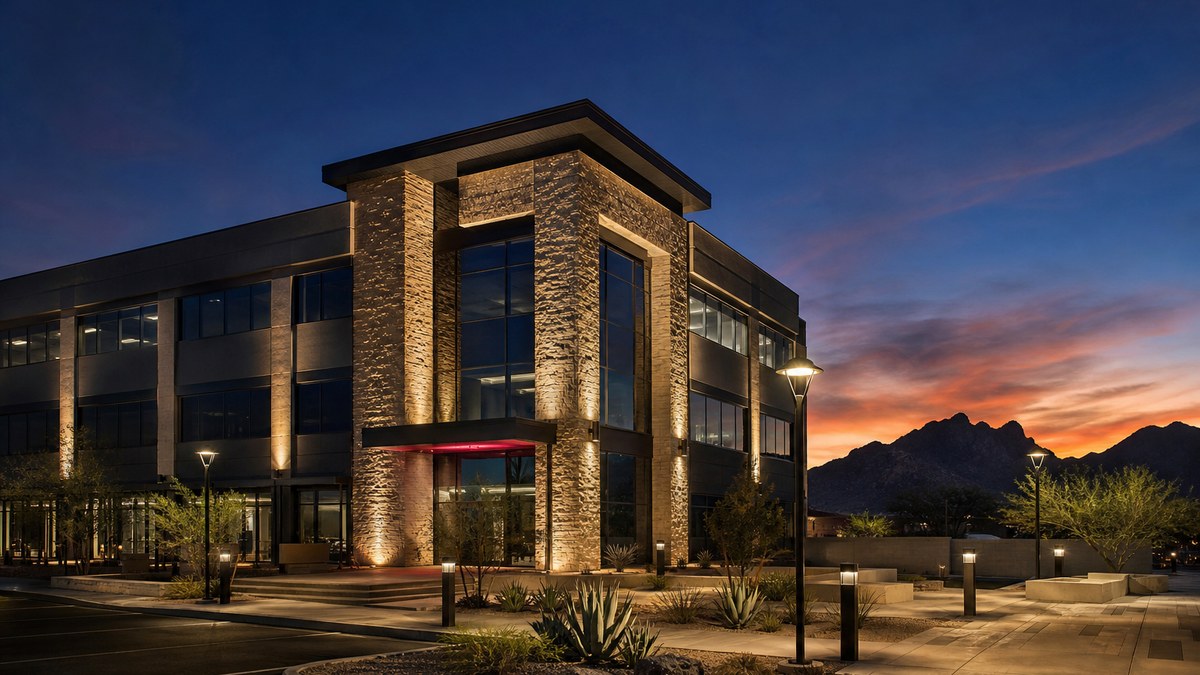
Commercial lighting systems in El Paso and West Texas work under conditions that a lighting plan written for Dallas or Houston does not always expect. Desert sun and dust, big swings between daytime heat and cold nights, wind, long distances between job sites, a different electric utility in almost every region, and some of the darkest night skies in the country all shape what a good LED system looks like out here. This guide explains how commercial LED lighting is planned, specified, installed and maintained for offices, warehouses, industrial yards, retail, hotels, schools and public buildings from El Paso to Midland–Odessa, Lubbock, San Angelo, Abilene and the Big Bend.
It is written for property managers, facility directors, owners, developers, architects and general contractors who need a clear picture before they ask for a proposal. Texas LED Lights designs and coordinates commercial LED projects statewide, and every project is priced as a project-specific proposal after we understand the building, the site and the goals.
Commercial lighting in El Paso and West Texas means LED interior, exterior and controls systems built for desert conditions and local rules. A good project covers:
- Interior LED: offices, warehouses, retail, schools and healthcare spaces lit to the task, with sensors and dimming.
- Exterior and site lighting: full-cutoff parking lot, pole, wall pack and canopy lighting with fixtures rated for heat, dust and UV.
- Industrial sites: yards, shops and processing areas, including classified locations where the electrical code requires listed fixtures.
- Dark-sky compliance: shielded, warm, well-aimed lighting where county and city outdoor lighting rules apply.
- Codes and incentives: the local energy code and utility programs from El Paso Electric, Oncor, AEP Texas, Xcel Energy or a municipal utility, depending on who serves the meter.
- Pricing: quoted per project after a site review, as a project-specific proposal.
Why West Texas lighting is different
Most lighting guides assume humid, mild, mostly urban conditions. West Texas is high desert and open range. That changes the job in practical ways:
- Sun and UV: intense sunlight is hard on plastic lenses, gaskets, paint and exposed cable. Fixtures with UV-stabilized optics, quality powder coat and metal housings hold up far better than budget products.
- Dust and blowing sand: dust storms load up lenses and heat sinks and can work into poorly sealed housings. Ingress protection ratings, sealed optics and a realistic cleaning plan matter.
- Heat and cold in the same day: large temperature swings stress seals, drivers and connections. Drivers need to be rated for the real ambient temperature at the fixture, which is much hotter under a metal roof deck or inside a sun-baked canopy.
- Wind: poles, brackets and fixture effective projected area must suit local wind exposure, especially on open sites, truck yards and highway frontage.
- Distance: sites can be hours apart. Projects need complete material lists, spare parts on hand and a service plan that does not depend on a technician being across town.
- Dark skies: parts of West Texas sit near world-class astronomical research, and outdoor lighting rules there are taken seriously.
None of this makes LED lighting harder to justify. It just means the fixture schedule, the mounting details and the controls need to be chosen for the region instead of copied from a big-city spec. Our commercial LED lighting fixtures buyer's guide covers the fixture families in more detail.
Where we work across West Texas
Texas LED Lights coordinates projects across the whole state from our DFW home base, and West Texas is a regular part of our coverage area. Each part of the region has its own mix of buildings and conditions.
| Area | Common building types | Lighting priorities |
|---|---|---|
| El Paso & Far West Texas | Downtown offices, medical buildings, cross-border logistics and manufacturing support, retail centers, hotels, schools | Warehouse high bays, parking lots, facades, controls, El Paso Electric program paperwork |
| Midland–Odessa & the Permian Basin | Oilfield service yards, shops, equipment storage, offices, hotels, retail | Area and flood lighting for yards, classified-location fixtures where required, durable shop lighting |
| Lubbock & the South Plains | Campus and medical buildings, agriculture and distribution, retail, sports facilities | High-bay and gym lighting, exterior site lighting, wind and hail exposure |
| San Angelo & Abilene | Offices, schools, healthcare, warehouses, churches, retail | Retrofits of older fluorescent and HID systems, parking lots, controls |
| Big Bend & the Davis Mountains | Hotels, lodges, public buildings, retail, ranch facilities | Dark-sky compliant exterior lighting, warm color, shielding and curfews |
Commercial lighting by building type
Offices and medical buildings
Office and clinic lighting in El Paso is mostly about comfort and control. Low-glare LED troffers and linear fixtures, layered lighting in lobbies, occupancy and daylight sensors near the large windows that bright desert light makes so useful, and tunable or dimmable lighting in conference and exam rooms. Retrofit kits often work in existing grid ceilings; full fixture replacement makes sense where the ceiling is being redone anyway. The commercial LED installation guide explains how installers plan this work around occupied floors.
Warehouses, distribution and manufacturing support
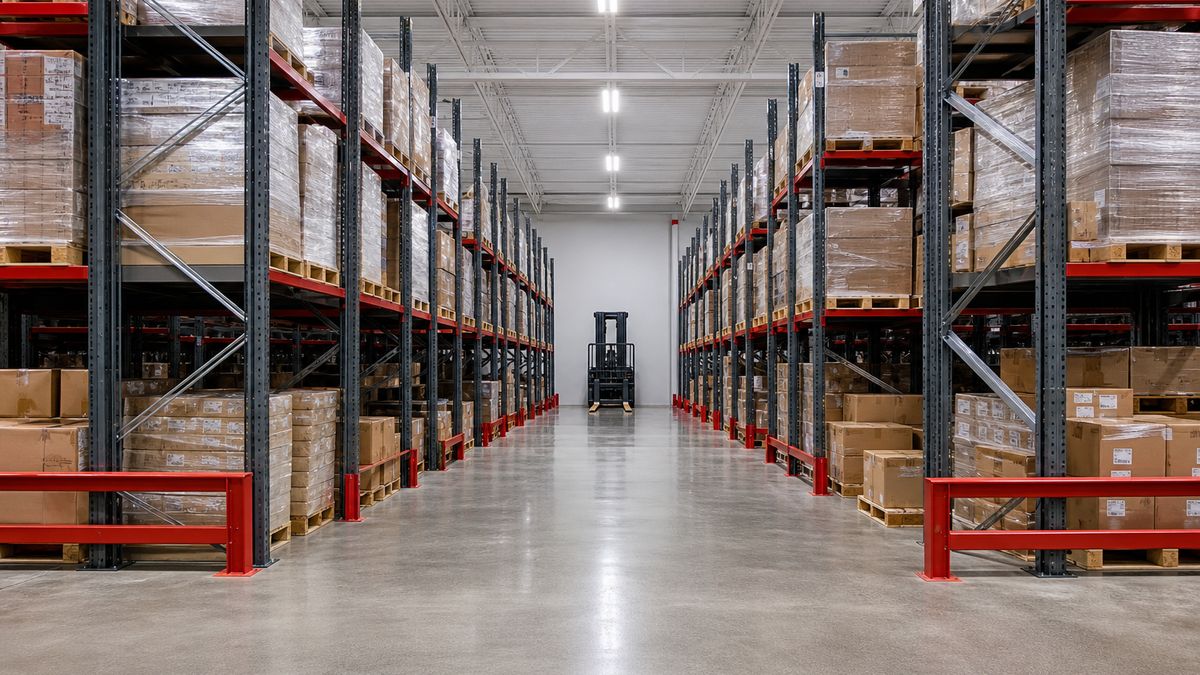
El Paso's logistics and manufacturing support buildings tend to be large, tall and busy around the clock. LED high bays with aisle optics for racking, wide distributions for open floors, and occupancy sensors in low-traffic aisles are the standard approach. Under hot roof decks, specify drivers rated for the real ambient temperature and avoid cheap fixtures whose drivers fail early in the heat. Docks need good vertical light into trailers and well-controlled exterior lighting outside the doors.
Oilfield service yards and industrial sites
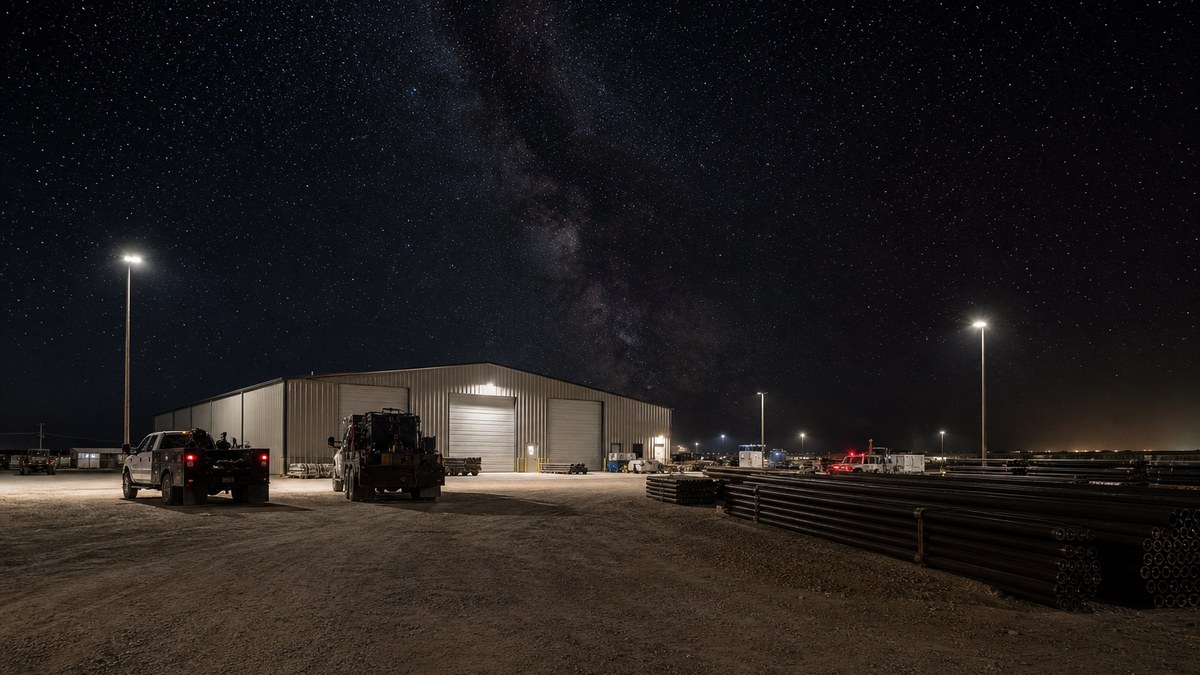
In the Permian Basin, many sites are open yards with shops, wash bays, fueling, pipe and equipment storage. LED area lights and floodlights on poles or buildings replace older metal halide and high-pressure sodium fixtures, with better uniformity and instant restrike after a power blip. Some areas near fuel, gas or chemical handling may be classified locations under the National Electrical Code (Articles 500 and 505), which require fixtures listed for that classification. The site owner's safety team and the authority having jurisdiction decide the classification; the lighting design follows it. Glare control matters here too: a yard lit with badly aimed floods is harder to work in, not easier.
Retail centers, restaurants and hotels
Retail and hospitality buildings sell with light. Storefront and canopy downlights, facade washing, sign lighting, warm and inviting parking areas and well-lit walkways all affect how a property feels after dark. Our Texas shopping center LED lighting guide and Texas LED hotel lighting guide go deeper on both. For entries, lobbies and event spaces, architectural lighting and LED video walls and displays can be part of the same project.
Schools, gyms and sports facilities
School districts across West Texas are converting gyms, field houses and stadiums to LED. Indoor courts need glare control and impact protection; outdoor fields need tight optics that keep light on the field and out of the sky and neighboring homes. See our Texas gym lighting guide, our LED sports lighting guide and our sports lighting services. For pools and natatoriums, read the natatorium lighting guide or visit our aquatic lighting services.
Churches, civic and public buildings
Worship spaces need dimmable, warm, glare-free light and often scene control for services and events. Civic buildings and public facilities add security and wayfinding requirements outside. Where public money pays for outdoor lighting, Texas Health & Safety Code chapter 425 contains rules for state-funded outdoor lighting fixtures, so confirm with the project's design professional and AHJ how it applies.
Exterior lighting in dark-sky country
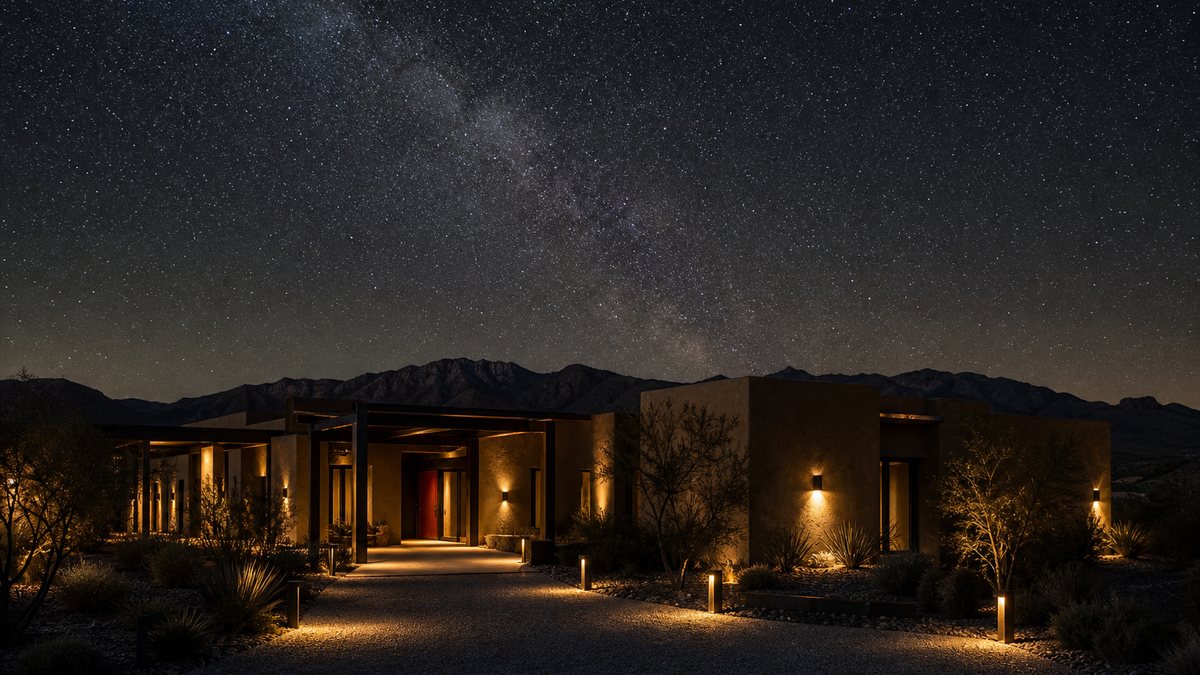
West Texas is home to McDonald Observatory in the Davis Mountains, and the region around it is part of the Greater Big Bend International Dark Sky Reserve created by the observatory and its community partners. That is good news for anyone who loves the night sky, and it has real consequences for commercial lighting.
Texas Local Government Code chapter 240 requires counties near McDonald Observatory to adopt orders regulating outdoor lighting in unincorporated areas, and it allows those counties to require permits for certain outdoor lighting, prohibit incompatible lighting types, set shielding requirements and limit the hours some lighting may be used. Several cities and counties in the region also have their own outdoor lighting ordinances. Requirements vary by location, so always confirm with your AHJ before you order fixtures.
Even outside regulated areas, the same principles produce better lighting on any West Texas site:
- Full-cutoff, fully shielded fixtures: light goes down onto the parking lot or walkway, not sideways into drivers' eyes or up into the sky.
- Warm color temperature: warmer white light is usually preferred in dark-sky areas and looks more inviting at hotels and restaurants.
- Right-sized light levels: design to recognized guidance such as IES RP-8 for parking and roadway areas and check the BUG rating (backlight, uplight, glare) under IES TM-15 instead of simply adding more lumens.
- Controls and curfews: photocells, astronomical timeclocks and motion-responsive dimming reduce light after business hours while keeping security lighting where it is needed.
- Careful aiming: floods and facade lights aimed at the building, not past it.
Our Texas commercial LED exterior lighting guide covers pole height, spacing, optics, wall packs and site controls in depth.
Planning a lighting project out west?
Send us your building type, location and goals. We will follow up with questions, a site review plan and a project-specific proposal.
Codes and rules to plan around
Lighting projects in West Texas are shaped by several layers of code. We name the rules here so you know what to ask about; exact requirements depend on the project, the jurisdiction and the code edition in force, so confirm them with your AHJ and design professional.
- Energy code: the State Energy Conservation Office (SECO) adopts the statewide commercial energy code, and cities can adopt their own editions and amendments. The City of El Paso's posted building code chapters (Chapter 18.70) reference the 2021 International Energy Conservation Code with local amendments. Confirm the edition in force with El Paso Planning & Inspections or your local building department before design.
- Lighting controls: energy codes include requirements for occupancy sensing, daylight responsive controls, exterior lighting controls and lighting power, which apply to new construction and many alterations.
- National Electrical Code: wiring methods, grounding and listed equipment, plus Articles 500 and 505 for classified hazardous locations and Article 680 for pools and fountains.
- Life safety: NFPA 101 egress and emergency lighting requirements, including periodic testing with written records.
- Outdoor lighting rules: county orders under Local Government Code chapter 240 near McDonald Observatory, city outdoor lighting ordinances, and Health & Safety Code chapter 425 for state-funded outdoor lighting.
- Licensing: electrical work is performed by electricians and electrical contractors licensed by the Texas Department of Licensing and Regulation (TDLR).
Utility incentives in El Paso and West Texas
West Texas is served by several different utilities, and the program available to you depends on which one serves the meter. Lighting upgrades may qualify for incentives depending on program availability, and most programs require paperwork before work begins.
| Utility (typical area) | What to know |
|---|---|
| El Paso Electric (El Paso and Far West Texas) | El Paso Electric's Texas business programs list lighting retrofits and lighting controls. Its Small Commercial Solutions program is for business customers below its demand threshold and works through participating contractors or self-sponsors; its Large Commercial Plus program covers larger commercial customers plus schools, cities and counties. Both describe pre- and post-inspections. |
| Oncor (parts of the Permian Basin and other areas) | Commercial projects go through participating service providers, and the pre-installation inspection must be approved before work starts or existing fixtures are removed. |
| AEP Texas (parts of West and Central Texas) | Offers commercial efficiency programs; confirm current program rules and timing before ordering. |
| Xcel Energy (Panhandle and South Plains areas) | Offers business efficiency programs in its Texas service area; confirm what is open for lighting. |
| Municipal and co-op utilities (e.g., Lubbock Power & Light, rural electric co-ops) | Programs vary widely or may not exist; ask the utility directly. |
Federal tax treatment such as the 179D energy-efficient commercial buildings deduction may also apply to qualifying projects; confirm with your tax advisor. Our Texas commercial LED retrofit guide explains the paperwork order in detail, and our Luminance program page describes another way to approach a lighting upgrade.
Choosing fixtures that survive the desert
A fixture that looks identical on a spec sheet can behave very differently after a few West Texas summers. When we build a fixture schedule for the region, we look at:
- Driver temperature rating against the real ambient temperature at the mounting location, not the room thermostat.
- Surge protection on exterior fixtures and poles, because lightning and utility switching are common on open sites.
- Ingress protection and sealed optics so dust stays out of the light engine.
- Housing and finish: die-cast aluminum, quality powder coat and UV-stable lenses rather than thin plastic.
- Mounting and wind: brackets, arms and poles that suit the fixture weight and local wind exposure.
- Listings: UL or equivalent listings for the location type (damp, wet, classified) and DLC listings where a utility program requires them.
- Parts support: replaceable drivers and photocells, and a manufacturer that will still have parts when you need them.
We have 15+ years as an authorized architectural lighting dealer and project coordinator. That experience is mostly about avoiding the products and details that create service calls later.
Lighting controls for large and remote sites
Controls are where much of a modern lighting system's value comes from, and they are especially useful when the building is far from the people who manage it.
- Occupancy and vacancy sensors for warehouses, restrooms, storage, offices and conference rooms.
- Daylight harvesting near windows and skylights, which bright West Texas sun makes very effective.
- Exterior scheduling with photocells and astronomical timeclocks, plus after-hours dimming where rules or owners want it.
- Networked controls that let a facility team check schedules, faults and energy use without driving to the site.
- Scene control for gyms, churches, ballrooms and lobbies, including DALI and DMX systems for architectural and color lighting.
Simple controls that someone understands beat complex controls nobody can reprogram. We document every schedule and setting at handover.
Retrofit or new layout?
Many West Texas buildings still run on fluorescent tubes, metal halide high bays and high-pressure sodium yard lights. There are three basic upgrade paths:
| Approach | Best fit | Watch out for |
|---|---|---|
| Lamp or kit retrofit | Sound existing fixtures in good condition, tight schedules | Keeps the old light distribution; check listings and driver ratings |
| One-for-one fixture replacement | Worn or obsolete fixtures where the layout works | The old layout may not suit current use, racking or codes |
| New lighting layout | Changed use, new racking, poor uniformity, dark-sky compliance, major renovation | Needs photometric design and more coordination, but fixes root problems |
For exterior sites near dark-sky areas, a new layout is often the right answer, because old wall packs and floods were never designed to be shielded.
How a West Texas project runs with us
- Intake: building type, location, utility, drawings or photos, goals and timing.
- Site review: fixture counts, mounting heights, ceiling and roof conditions, controls, exterior site conditions and any classified areas, including a night look at exterior lighting where possible.
- Design: fixture schedule, photometric layouts where needed, controls narrative and code and dark-sky review.
- Proposal: a project-specific proposal with scope, schedule and any incentive steps.
- Incentive paperwork: utility pre-installation steps completed before anything is removed.
- Procurement and logistics: complete material lists, spares and delivery staging, because a missing part is expensive when the site is hours away.
- Installation: licensed installation, phased around operations, with life-safety lighting kept working.
- Commissioning: controls programmed and tested, exterior lighting checked after dark, emergency lighting verified, documentation delivered.
- Service: ongoing support through our repair and service team; see the commercial lighting maintenance and repair guide.
Larger venues and complex sites get the same care. Our licensed installation partner has completed over 200 major sports and commercial projects across the US and Canada — NFL, NBA, NHL, MLS, NCAA and NASCAR. See examples of the kind of work we coordinate in our portfolio, and the full list of services.
Questions to ask any lighting contractor
- Will you visit the site, including at night for exterior lighting, before you price the job?
- Which driver temperature ratings, surge protection and ingress ratings are you specifying, and why?
- How will the design meet the local energy code and any outdoor lighting ordinance?
- Which utility serves this meter, and what has to happen before installation for an incentive?
- Who performs the electrical work, and are they TDLR licensed?
- How will you commission the controls, and what documentation do we receive?
- How is service handled for a site this far from a major metro?
Our guide to choosing commercial lighting contractors in Texas covers qualifications and process in more depth.
Frequently Asked Questions
Do you provide commercial lighting systems in El Paso?
What makes commercial lighting in West Texas different?
Are there outdoor lighting rules in West Texas?
What is dark-sky friendly commercial lighting?
Does El Paso Electric offer incentives for LED lighting?
Which energy code applies to commercial lighting in El Paso?
Can you light oilfield yards and industrial sites in the Permian Basin?
How much does commercial LED lighting cost in El Paso?
What areas of West Texas do you serve?
Light it right from El Paso to the Permian
Tell us about your building or site. We will follow up with a site review plan and a project-specific proposal built around desert conditions, local rules and your goals.
Related
Elsewhere in Texas, see our guides to commercial LED lighting in Houston, commercial lighting in Austin, commercial lighting services in San Antonio and South Texas commercial LED lighting. For special spaces, explore fiber optic starlight ceilings, LED video walls and displays and pool and aquatic center lighting.
Our Texas lighting network: Dallas commercial LED lighting, Fort Worth LED lighting, Arlington LED lighting, Irving LED lighting, Plano LED lighting, wholesale LED components, fiber optic starlight ceilings, 360° fiber optic lighting, premium pool lighting, LED signage and message centers, modular building solutions, and Dallas modular structures. Read more lighting guides on our blog or contact us to talk about your property.