Commercial Lighting Services in San Antonio, TX: LED Retrofits, Exterior Lighting & Controls
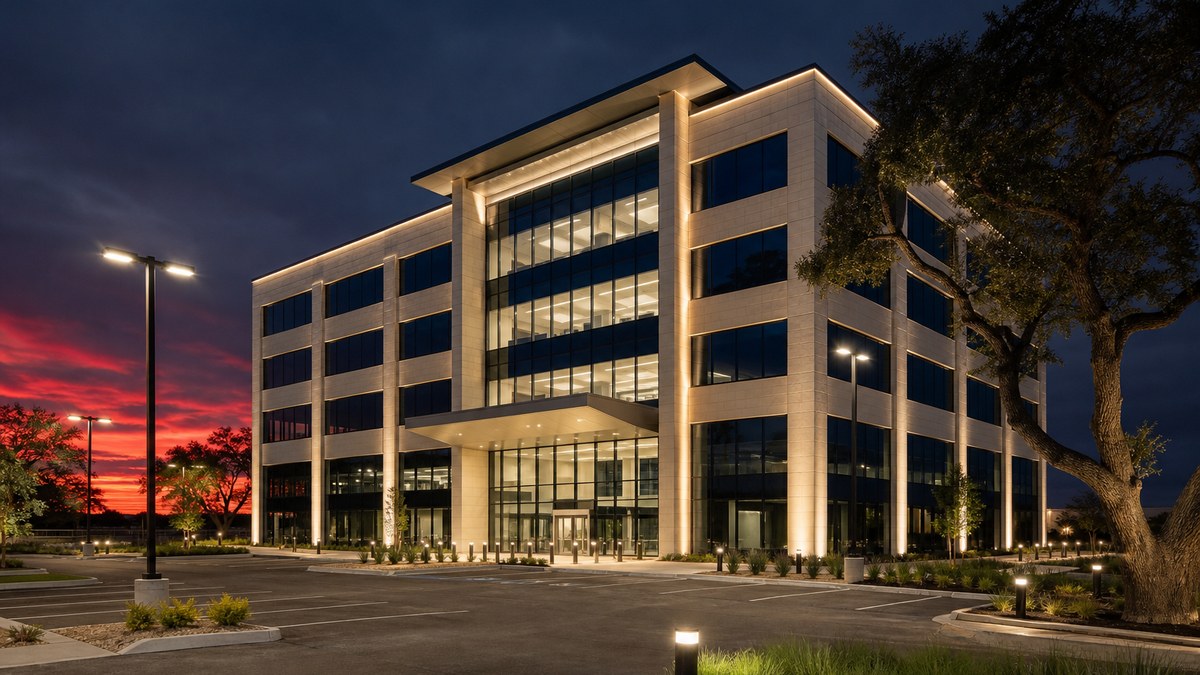
Finding the right commercial lighting services in San Antonio, TX means more than swapping old lamps for LED. San Antonio is a city of River Walk hotels and restaurants, a major medical and bioscience district, military installations with protected night skies, fast-growing logistics and manufacturing corridors along I-35, I-10 and Loop 410, historic districts with design review, and suburbs that stretch into the Hill Country. Each of those settings asks something different of a lighting system, and the rules that apply can change from one block to the next.
This guide is written for property managers, facility directors, business owners, developers, architects and general contractors across Bexar County and the surrounding area, including New Braunfels, Schertz, Cibolo, Converse, Live Oak, Universal City, Boerne, Helotes, Leon Valley and Seguin. It covers what commercial lighting services include, how San Antonio's climate and local rules affect fixture choices, how to approach interior retrofits, parking lots and facades, how CPS Energy's commercial program and other incentives fit in, and how a project runs from site walk to commissioning.
Commercial lighting services in San Antonio cover the full life of a building's lighting: assessment, design, LED retrofit or new installation, controls, exterior and parking lot lighting, facade and architectural lighting, and ongoing service.
- Interior LED retrofits: offices, warehouses, schools, clinics, churches, retail and hospitality spaces
- Exterior and parking lots: full-cutoff area lights, wall packs, canopies and pathway lighting
- Local rules: the Military Lighting Overlay District, historic and River Walk design review, and the City's adopted energy code
- Climate: fixtures and drivers rated for long hot summers, humidity, hail and storm surges on the grid
- Incentives: CPS Energy's Commercial Solutions Program may offer incentives for qualifying lighting and controls, depending on program availability
- Pricing: every project gets a project-specific proposal after a site review
What commercial lighting services include
"Commercial lighting services" covers a wide range of work. Some owners need a single parking lot fixed before the next tenant moves in; others want an entire campus brought up to current standards with networked controls. A full-service lighting partner should be able to handle all of it, or tell you clearly which pieces you need:
| Service | What it covers | Typical San Antonio buildings |
|---|---|---|
| Lighting assessment | Fixture inventory, light-level readings, controls review, problem areas and goals | Any building planning an upgrade or sale |
| LED retrofit | Replacing fluorescent, HID and halogen systems with LED fixtures or kits | Offices, warehouses, schools, clinics, churches |
| New construction lighting | Fixture packages, layouts and controls coordinated with the design team | Industrial parks, medical offices, multifamily, retail pads |
| Exterior and parking lot | Area lights, poles, wall packs, canopies, pathways and security lighting | Shopping centers, office parks, apartments, hotels |
| Architectural and facade | Grazing, washing, accent, color-changing and landscape lighting | Hotels, restaurants, towers, churches, historic buildings |
| Controls | Occupancy and daylight sensors, scheduling, dimming and networked systems | Offices, schools, warehouses, campuses |
| Specialty systems | Sports fields, pools, LED video walls, signage and starlight ceilings | Schools, clubs, venues, hospitality |
| Service and maintenance | Troubleshooting, repairs, group relamping plans and controls tune-ups | Multi-site portfolios and facilities teams |
You can see the full scope of what we design and install on our commercial lighting services page, and an overview of the company on our Texas LED Lights home page.
Why San Antonio lighting is different
Long, hot summers and humidity
San Antonio summers are long and hot, and many commercial spaces, especially warehouses, loading docks, parking garages and rooftop equipment areas, run far hotter than the thermostat in the lobby. Heat is the enemy of LED drivers. Fixtures for these spaces should be rated for the actual ambient temperature where they will hang, with good thermal management and drivers specified for high-heat operation. Humid air and sudden downpours also mean exterior fixtures need appropriate wet-location and ingress ratings, sealed housings and corrosion-resistant finishes.
Hail, storms and power quality
South-central Texas sees hail, high winds, lightning and flash flooding. Exterior optics and housings should stand up to impact, poles and bases should be evaluated for wind loads, and every exterior circuit benefits from proper surge protection and grounding. Lightning-related surges are a common cause of driver failures on parking lots and building-mounted fixtures.
Protected night skies near military installations
San Antonio is one of the few cities with lighting rules written specifically to protect military night training. The City's Military Lighting Overlay District (MLOD) limits glare, light trespass and sky glow around Camp Bullis, and the City has worked on extending protections to areas around Joint Base San Antonio-Lackland. Within the overlay, outdoor fixtures generally must be fully shielded and aimed downward, light at the property line is limited, and some security lighting must be motion-activated. Existing lighting is usually grandfathered, but significant alterations can trigger compliance. If your property is on the north side near Camp Bullis or the west side near Lackland, confirm with the City of San Antonio Development Services Department whether the overlay applies before you order exterior fixtures.
Historic districts and the River Walk
Downtown, King William, Monte Vista, Dignowity Hill and other historic districts carry design review for exterior changes, and the River Walk and nearby corridors have their own overlay and design guidelines. Facade, sign and site lighting changes in these areas may need review by the City's Office of Historic Preservation or the Historic and Design Review Commission. Warm color temperatures, concealed fixtures and careful aiming that respects limestone, stucco and historic detailing usually make approval smoother. Confirm requirements with your AHJ early.
Hill Country and dark-sky communities
Growth toward Boerne, Helotes, Bulverde and the Hill Country brings more communities with dark-sky values and their own outdoor lighting ordinances. Full-cutoff fixtures, warm color temperatures and sensible curfews are becoming the expectation for new commercial development at the edge of the metro.
Before you approve an exterior lighting package, check three things: whether the site is inside the Military Lighting Overlay District, whether it sits in a historic district or the River Walk overlay, and which edition of the energy code the City has adopted for your permit. Each one can change fixture choices, color temperature, shielding and controls.
Interior LED retrofits by building type
Most San Antonio commercial buildings still have at least some fluorescent troffers, metal halide high-bays or halogen accent lights. An LED retrofit replaces them with modern fixtures or retrofit kits and usually adds controls. Here is how the work differs by building type.
Offices and medical office buildings
Offices and clinics need comfortable, glare-controlled light for screens and paperwork, good color rendering for exam rooms, and controls that meet the energy code. Common approaches include LED flat panels or troffer retrofit kits in existing ceiling grids, linear pendants in open offices, downlights in corridors and lobbies, and occupancy and daylight sensors throughout. Medical spaces add requirements for exam and procedure lighting, emergency egress and cleanability. Our commercial LED fixtures buyer's guide explains each fixture family in plain language.
Warehouses, distribution and manufacturing
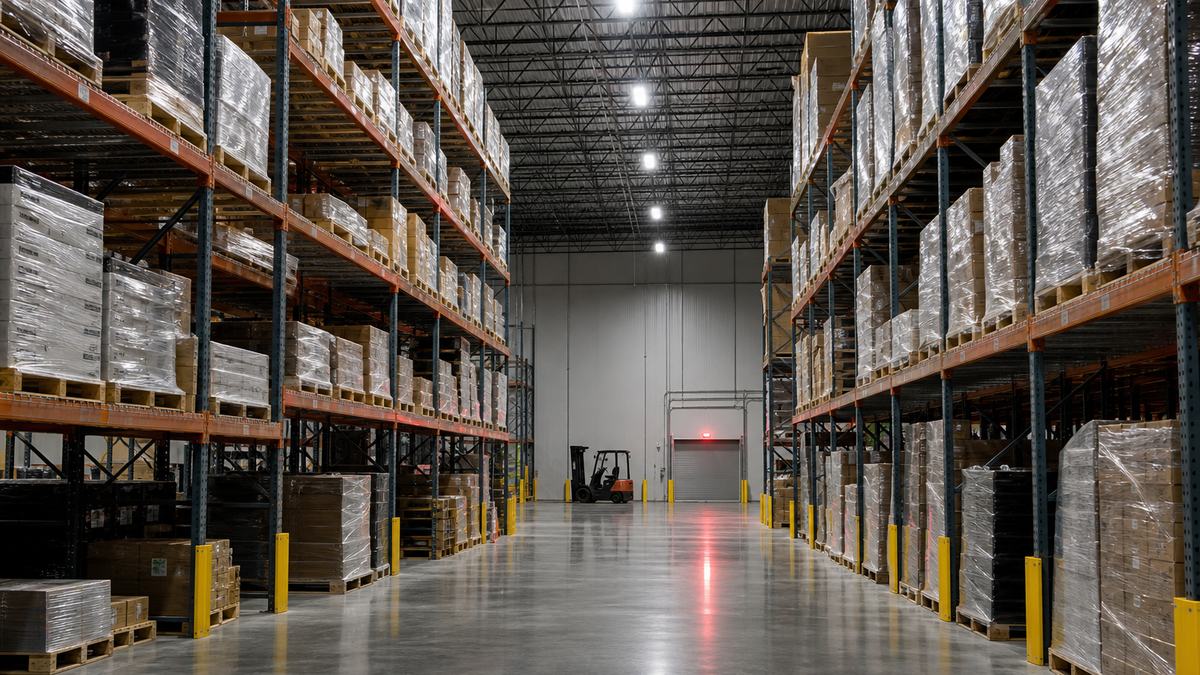
Logistics and manufacturing are booming on the east, south and northeast sides of the metro and along the I-35 corridor toward New Braunfels. These buildings typically need LED high-bays (round or linear) with optics matched to rack aisles or open floors, vapor-tight fixtures for wash-down or dusty areas, and sensors so aisles stay dark until someone drives in. Heat ratings matter more here than anywhere else: the air near a warehouse roof in August is far hotter than at floor level.
Schools, colleges and churches
Classrooms, gyms, cafeterias, sanctuaries and fellowship halls each need different light. Schools want glare-free classroom light, robust gym fixtures and simple controls; churches often want dimmable, warm light for worship plus architectural accents for stained glass, altars and exteriors. Gymnasiums and fields can be part of the same project—see our LED sports lighting guide for fields, courts and arenas.
Hotels, restaurants and hospitality
Hospitality drives a large share of San Antonio's economy, and lighting is part of the guest experience: warm, dimmable public spaces, flattering restaurant lighting, layered ballroom and meeting room systems, durable back-of-house fixtures and inviting exteriors along the river and downtown streets. Many hotels also add LED feature walls, color-changing facades or fiber optic starlight ceilings in lounges and suites.
Retail and shopping centers
Retail tenants want bright, accurate light on merchandise, while landlords care about parking lot safety, storefront consistency and common-area maintenance. Our Texas shopping center LED lighting guide covers parking lots, storefronts, facades and common areas in detail.
Planning a lighting upgrade in San Antonio?
Tell us about your building and we will follow up to schedule a site review and prepare a project-specific proposal.
Exterior and parking lot lighting in San Antonio
Exterior lighting does the most visible work on a commercial property. It shapes how safe a parking lot feels, how a building looks from the highway at night and how much light reaches neighbors and the sky. In San Antonio it is also where most local rules apply.
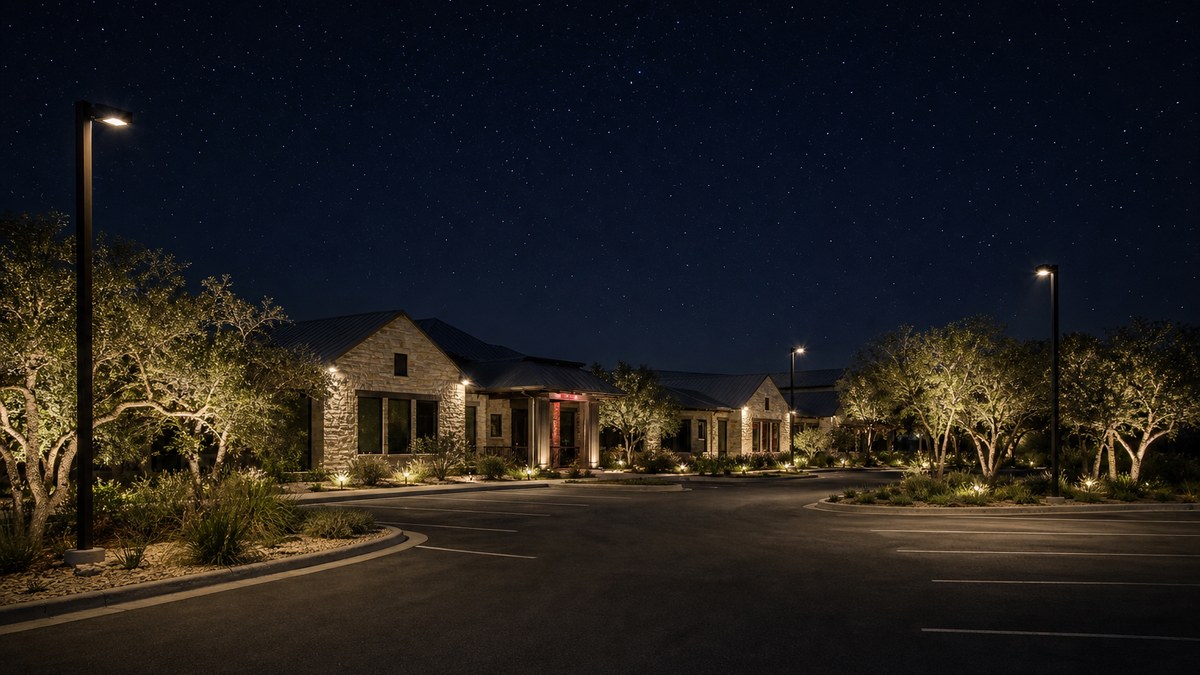
- Area and pole lights: full-cutoff LED area lights with the right distribution type for the lot shape keep light on the pavement and off neighboring properties. Existing poles and bases should be inspected for rust, cracks and wind rating before new heads go on.
- Wall packs: modern full-cutoff wall packs replace the glaring older styles that throw light straight into drivers' eyes, which matters inside the MLOD and in historic districts.
- Canopies: fuel stations, drive-thrus, porte-cocheres and covered entries need low-glare canopy fixtures with even coverage.
- Pathway and landscape: bollards, step lights and landscape fixtures guide people safely and highlight the building.
- Security lighting: motion-activated fixtures and camera-friendly light levels support security without lighting the site at full output all night.
- Controls: photocells, astronomical time clocks, dimming after business hours and motion response cut wasted light and help meet code and overlay requirements.
A photometric plan is the best way to see the result before you buy. It shows light levels across the site, uniformity, and light at the property line—exactly what a city reviewer, an HOA or a neighbor will ask about. For more on site lighting across the state, see our commercial LED lighting installation guide.
Facade and architectural lighting
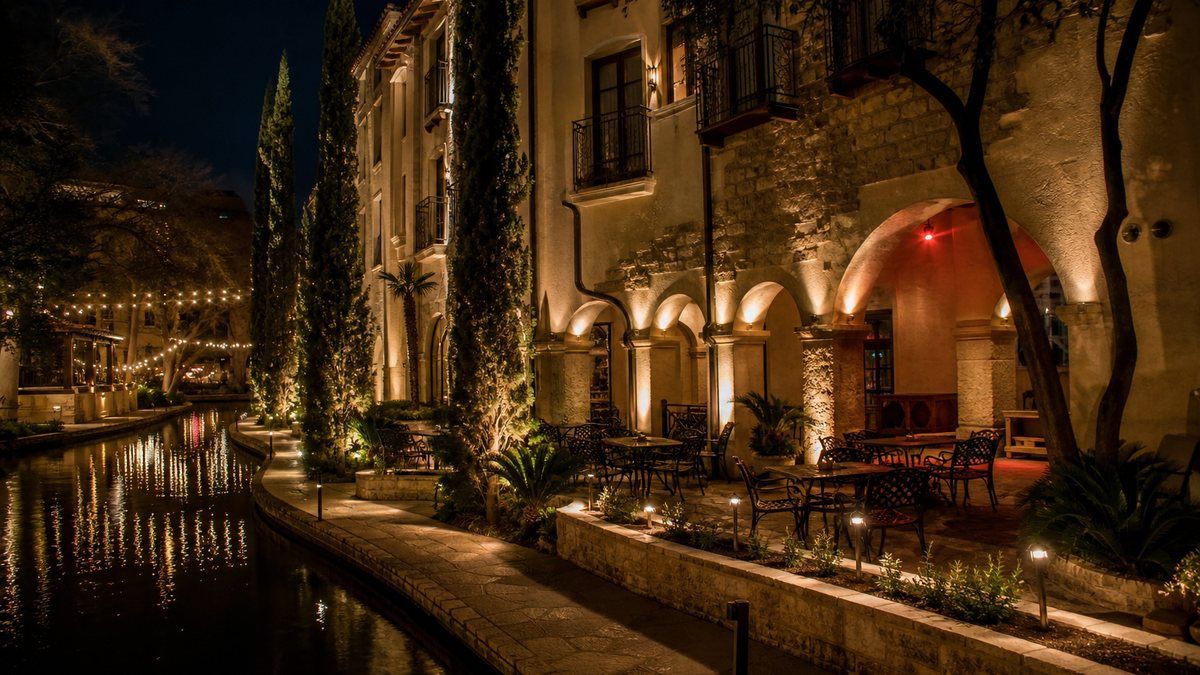
San Antonio's architecture—limestone, stucco, Spanish Colonial and Mission Revival details, mid-century towers and new glass offices—rewards good architectural lighting. A well-designed facade system makes a building recognizable at night and supports the brand of a hotel, restaurant, church or corporate headquarters.
- Grazing: fixtures mounted close to the wall bring out the texture of stone and stucco.
- Washing: even light across larger surfaces for a clean, modern look.
- Accent and uplighting: columns, arches, bell towers, signage walls and trees.
- Color-changing (RGBW): for holidays, Fiesta, community causes and events, controlled by schedules or DMX.
- Media facades and video: LED displays and LED video walls for venues and retail destinations, plus LED signage and message centers.
In historic districts and near military installations, architectural lighting must be especially careful about aiming, shielding and color, so design and approvals should go together. Learn more about our architectural lighting services and the Luminance design-build program for complete lighting transformations.
Lighting controls and code compliance
Controls are where much of the long-term value of an LED project comes from, and modern energy codes require many of them for new construction and major alterations. Typical requirements in current codes include automatic shutoff, occupancy sensing in many space types, daylight-responsive controls near windows and skylights, and exterior lighting that reduces or turns off after hours. The exact requirements depend on the code edition adopted by the City of San Antonio or your local jurisdiction, so always confirm with your AHJ.
| Control type | What it does | Where it fits best |
|---|---|---|
| Occupancy / vacancy sensors | Turns lights on or off based on whether people are present | Restrooms, offices, storage, warehouse aisles |
| Daylight harvesting | Dims fixtures near windows when daylight is available | Perimeter offices, lobbies, classrooms |
| Scheduling and time clocks | Turns lighting on and off by time of day and calendar | Retail, schools, exteriors, churches |
| Task tuning and dimming | Sets each area to the light level it actually needs | Offices, warehouses, hospitality |
| Networked lighting controls | Connects fixtures for zoning, monitoring and reporting | Campuses, large offices, multi-building sites |
| Exterior dimming and motion | Lowers parking lot and facade output after hours, raises it on motion | Parking lots, MLOD properties, apartments |
Good commissioning—setting sensor timeouts, daylight setpoints, schedules and trims—is what makes controls work in practice. Ask how the installer will commission the system and train your staff.
CPS Energy and other incentives
Most of San Antonio is served by CPS Energy, the city-owned utility. Its Commercial Solutions Program lists lighting retrofits and lighting controls among the measures that may qualify for incentives, alongside HVAC, refrigeration, building envelope and new construction projects. The program is part of CPS Energy's broader Sustainable Tomorrow Energy Plan (STEP). Program rules, eligible measures and incentive levels change over time, and some programs require applications before equipment is purchased or installed, so check current details before you commit.
- CPS Energy customers: lighting and controls projects may qualify for incentives depending on program availability and measure requirements.
- Outside CPS territory: some suburban and Hill Country sites are served by other municipal utilities or electric cooperatives, each with its own programs. Sites in the AEP Texas, Oncor or CenterPoint service areas elsewhere in the state may qualify for those utilities' programs, depending on program availability.
- Federal tax deduction: the Section 179D energy-efficient commercial buildings deduction can apply to qualifying lighting work—confirm with your tax advisor.
We help gather the fixture schedules, specifications and documentation that incentive applications typically ask for, so the paperwork does not hold up the project.
Retrofit kits or new fixtures?
One of the first decisions on any San Antonio retrofit is whether to keep existing housings and install LED retrofit kits, or replace fixtures entirely.
| Option | When it makes sense | Things to watch |
|---|---|---|
| LED retrofit kits | Housings are in good condition and the layout works | Listing and labeling of the kit, ceiling disruption, controls compatibility |
| New LED fixtures | Housings are damaged, the layout is wrong or the space is being remodeled | Ceiling grid work, disposal, coordination with other trades |
| Lamp-only replacement | Short-term fixes or decorative fixtures | Ballast compatibility, limited control options, shorter-term solution |
| Full redesign | Change of use, major renovation or poor existing light quality | Design time, permits and energy code compliance |
Many projects mix approaches: retrofit kits in offices with good grids, new high-bays in the warehouse and new full-cutoff fixtures outside. A site assessment sorts out which option fits each area.
How a San Antonio lighting project works
- Consultation: a quick conversation about the building, the problems you see and your timeline.
- Site walk and assessment: fixture inventory, light-level readings, controls review, ceiling and pole conditions, and electrical notes.
- Local review: check for the Military Lighting Overlay District, historic or River Walk review, HOA or owner standards, and the applicable energy code.
- Design: fixture selection, layouts, photometric plans for exteriors and key interiors, and a controls narrative.
- Proposal: a project-specific proposal with scope, fixture schedule, schedule and incentive notes.
- Permits and incentive paperwork: permit applications where required, plus utility program documentation.
- Installation: phased around business hours, tenants, guests or school calendars, by licensed professionals.
- Commissioning: aiming, sensor setup, schedules and dimming levels verified on site, including night checks for exteriors.
- Training and service: staff walkthrough of controls and ongoing service when you need it.
What drives project cost
Every San Antonio project is quoted individually after an assessment. The main factors are:
- Building size and fixture count: how many fixtures and how many space types
- Retrofit or replacement: kits in existing housings versus new fixtures and ceiling work
- Mounting heights and access: lifts for warehouses, atriums, poles and facades
- Controls scope: simple sensors and time clocks through networked systems
- Exterior conditions: pole and base condition, wiring, trenching and overlay requirements
- Design and approvals: photometric plans, historic or overlay review and permits
- Scheduling: after-hours or phased work in occupied buildings
We put all of this into a clear, project-specific proposal so you can compare options and make a decision with confidence.
Who does the work: our experience
Texas LED Lights brings 15+ years as an authorized architectural lighting dealer and project coordinator. Our licensed installation partner has completed over 200 major sports and commercial projects across the US and Canada — NFL, NBA, NHL, MLS, NCAA and NASCAR. We coordinate design, products, installation and commissioning so San Antonio owners have one point of contact from the first site walk to the final night check.
We serve the whole state, from Corpus Christi, the Rio Grande Valley and Laredo to Dallas–Fort Worth, Houston, Austin and El Paso. See where we work on our coverage map, browse our services and portfolio, and read our guide to choosing commercial lighting contractors in Texas.
Questions to ask before you hire
- Have you checked whether our site is inside the Military Lighting Overlay District or a historic district?
- Will you provide a photometric plan for the parking lot and exterior, including light at the property line?
- Are the fixtures and drivers rated for the heat in our warehouse, dock or garage?
- Which controls are included, and how will you commission them?
- Do you recommend retrofit kits or new fixtures for each area, and why?
- Will you help with CPS Energy or other utility incentive documentation?
- How will installation be phased around our tenants, guests or operations?
- What warranties apply to fixtures, drivers and installation, and who handles service?
Frequently Asked Questions
What do commercial lighting services in San Antonio include?
What is the Military Lighting Overlay District in San Antonio?
Do I need approval to change exterior lighting in a historic district?
Does CPS Energy offer incentives for commercial LED lighting?
Should we use LED retrofit kits or replace our fixtures?
What LED fixtures work best in hot San Antonio warehouses?
Are lighting controls required by code?
Can you work after hours in occupied buildings?
How much do commercial lighting services cost in San Antonio?
Which areas around San Antonio do you serve?
Better light for your San Antonio building
Request a consultation and we will follow up to schedule a site review and prepare a project-specific proposal.
Related
Our Texas lighting network: Dallas commercial LED lighting, Fort Worth LED lighting, Arlington LED lighting, Irving LED lighting, Plano LED lighting, wholesale LED components, fiber optic starlight ceilings, 360° fiber optic lighting, premium pool lighting, modular building solutions, and Dallas modular structures. Browse more guides on our blog.