Commercial LED Lighting Installation in Texas: How Professional Installers Plan, Retrofit & Commission
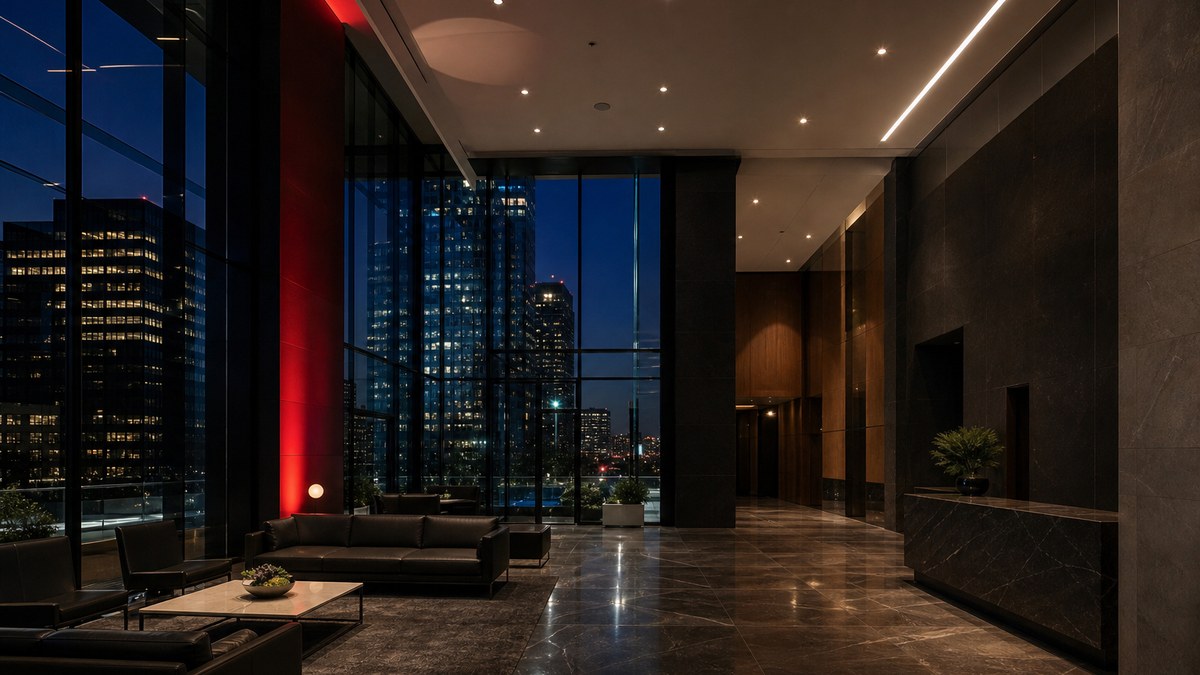
Commercial LED lighting installation in Texas is much more than swapping old tubes for new ones. A good installation starts with a site survey and a lighting design, follows the electrical code and your local authority having jurisdiction, coordinates around tenants and operating hours, and ends with controls that are programmed, tested and handed over to your facility team. When any of those steps is skipped, owners end up with dark corners, glare, flicker, controls nobody understands and fixtures that fail early in the Texas heat.
This guide is for property managers, facility directors, building owners, general contractors and operations teams across Texas who are planning an LED upgrade or new commercial lighting. It explains what commercial LED lighting installers actually do, how retrofits differ from new installations, which codes and energy rules apply, how controls change the project, what to expect on schedule and disruption, and how to compare installers before you sign a proposal.
Professional commercial LED lighting installation in Texas follows a clear sequence: site survey, lighting design and photometrics, code and energy review, a project-specific proposal, scheduled installation by licensed electricians, controls programming, and commissioning with as-built documentation.
- Survey first: existing fixtures, ceilings, circuits, controls and problem areas are documented before anything is ordered
- Design to the task: light levels and uniformity follow the use of each space, guided by IES recommendations
- Code compliance: work follows the NEC and the energy code adopted locally; confirm with your AHJ
- Retrofit options: lamp replacement, retrofit kits or full fixture replacement, chosen space by space
- Controls: occupancy sensing, daylight dimming and scheduling are often required on major work
- Commissioning: sensors, schedules and dimming are tested and documented before handover
- Pricing: every project is quoted with a project-specific proposal after a site review
What commercial LED lighting installers actually do
Searching for "commercial LED lighting installers" returns everything from handymen to national energy service companies. A qualified commercial installer combines lighting design, electrical work and project management. On a typical Texas project the installer is responsible for:
- Assessment: walking the building, counting and identifying fixtures, measuring existing light levels, and noting ceiling types, mounting heights and access constraints.
- Design: selecting fixtures, optics, color temperature and controls for each space, supported by photometric layouts where light levels matter.
- Electrical scope: confirming circuits, voltages, panel capacity, emergency lighting and any wiring changes required.
- Compliance: pulling permits where required, following the National Electrical Code and the locally adopted energy code, and coordinating inspections.
- Procurement and logistics: ordering fixtures and controls, staging material, arranging lifts and protecting finished spaces.
- Installation: removing old equipment, installing new fixtures, drivers, sensors and controls, and disposing of old lamps and ballasts properly.
- Commissioning and handover: programming and testing controls, verifying light levels and training your staff.
Electrical work in Texas is performed under state electrical licensing administered by the Texas Department of Licensing and Regulation (TDLR), and many cities add their own permit and inspection requirements. Always ask who will perform the electrical work and under which license.
Retrofit vs. new installation: choosing the right path
Most Texas commercial buildings already have lighting, so the first decision is how much of it to keep. There is no single right answer; the best projects often mix approaches space by space.
| Approach | What it involves | Best suited for |
|---|---|---|
| LED lamp replacement | Replacing fluorescent or HID lamps with compatible LED lamps, sometimes bypassing the ballast | Fixtures in good condition where speed and minimal disruption matter most |
| Retrofit kits | Installing an LED kit inside the existing housing, replacing lamps, sockets and ballast | Sound troffers and housings in finished ceilings you do not want to disturb |
| Fixture replacement | Removing old fixtures and installing new LED luminaires | Aging, damaged or poorly performing fixtures; spaces that need better optics or controls |
| Redesign | New layout, new fixtures and new controls designed from scratch | Renovations, change of use, tenant improvements and spaces with chronic lighting problems |
Lamp-only swaps are fast, but they leave old housings, sockets and lenses in place and can limit controls. Fixture replacement and redesign take more planning but solve glare, uniformity and control problems at the source. A good installer will explain the trade-offs for each area rather than pushing one product across the whole building.
Ask for the scope to be broken down by space type: offices, corridors, restrooms, warehouse, exterior, parking. That makes it easy to see where a lamp swap is enough and where a fixture replacement or redesign is worth it.
Step-by-step: how a Texas installation project runs
- Discovery call: goals, building type, operating hours, known problems, tenant constraints and timeline.
- Site survey: fixture-by-fixture audit, ceiling and mounting details, circuits and panels, existing controls, emergency lighting and photos of problem areas.
- Lighting design: fixture selection, color temperature and color rendering, optics, controls zoning and photometric layouts where needed.
- Code and energy review: applicable electrical and energy code requirements, permit needs and any utility incentive program requirements.
- Project-specific proposal: scope by area, fixture schedule, controls narrative, schedule and exclusions, so you can compare apples to apples.
- Submittals and approvals: product data sheets, owner sign-off and, where required, permits.
- Scheduling and logistics: phasing by floor or zone, after-hours or weekend work, lift access and material staging.
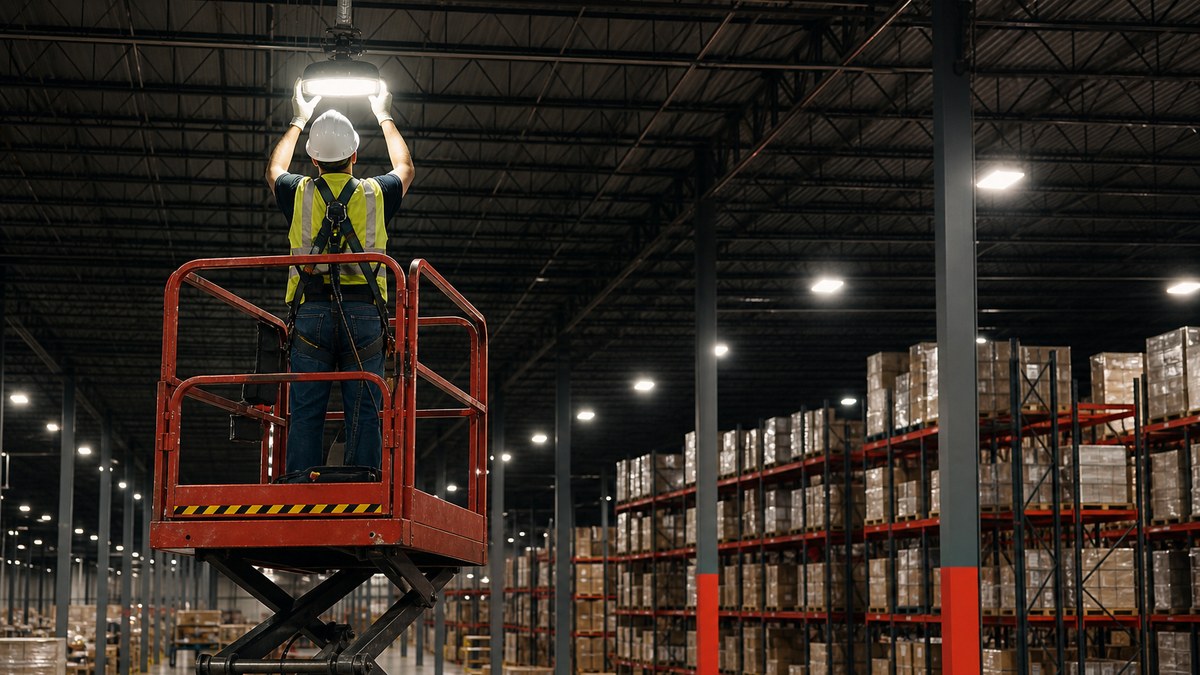
- Installation: licensed electricians install fixtures, wiring changes, sensors and controls while protecting finishes and keeping areas safe.
- Commissioning: sensors aimed and timed, daylight zones calibrated, schedules set, emergency lighting tested.
- Closeout: as-built documentation, control settings, product warranties from the manufacturers and staff training.
Codes, energy rules and permits
Commercial lighting in Texas sits at the intersection of electrical safety rules, energy codes and local ordinances. The exact requirements depend on your city or county and the scope of work, so the rule of thumb is simple: name the code, then confirm details with your authority having jurisdiction (AHJ).
- National Electrical Code (NEC): governs wiring methods, circuits, grounding and equipment installation. Texas cities adopt specific editions, sometimes with local amendments.
- Energy code: Texas commercial buildings are generally covered by the energy code adopted at the state and local level, based on the International Energy Conservation Code and ASHRAE 90.1. Major lighting alterations can trigger requirements for lighting power, occupancy sensing, daylight-responsive controls and automatic shutoff.
- Emergency and egress lighting: fire and life-safety codes require egress paths to stay lit during power loss. Retrofits must keep emergency fixtures, battery packs and transfer devices working and tested.
- Exterior lighting ordinances: some cities limit glare, light trespass and uplight for parking lots, building facades and signs.
- Permits and inspections: many jurisdictions require electrical permits for fixture replacement and controls work; lamp-only swaps may be treated differently. Your installer should confirm this before work starts.
For federal tax considerations such as the Section 179D energy-efficient commercial buildings deduction, the lighting system may be part of a qualifying project; confirm eligibility with your tax advisor.
Lighting controls: the part that makes LED pay off
LED fixtures alone are only half of a modern lighting system. Controls decide when lights are on, how bright they are and how easy the system is to live with. They are also where many installations go wrong, because sensors are installed but never adjusted.
| Control type | What it does | Where it fits |
|---|---|---|
| Occupancy / vacancy sensors | Turn lights on or off based on presence | Private offices, restrooms, storage, break rooms, warehouse aisles |
| Daylight-responsive dimming | Dims fixtures near windows and skylights when daylight is available | Perimeter offices, lobbies, retail and warehouses with skylights |
| Time scheduling | Turns lighting on and off by business hours | Common areas, exterior, parking and signage |
| High-end trim / task tuning | Sets maximum output to what the space actually needs | Over-lit spaces and new layouts |
| Networked / wireless controls | Fixture- or zone-level control, monitoring and reporting from a central interface | Multi-floor offices, campuses, warehouses and portfolios |
| Scene control | Preset looks for different uses of the same space | Conference rooms, lobbies, hospitality and event spaces |
Ask your installer who programs the controls, how settings are documented, and what training your team receives. A controls system that the facility team cannot adjust is a system that will be overridden.
Planning an LED upgrade in Texas?
Tell us about your building and we will follow up to schedule a site survey and prepare a project-specific proposal.
Installation by building type
Office buildings
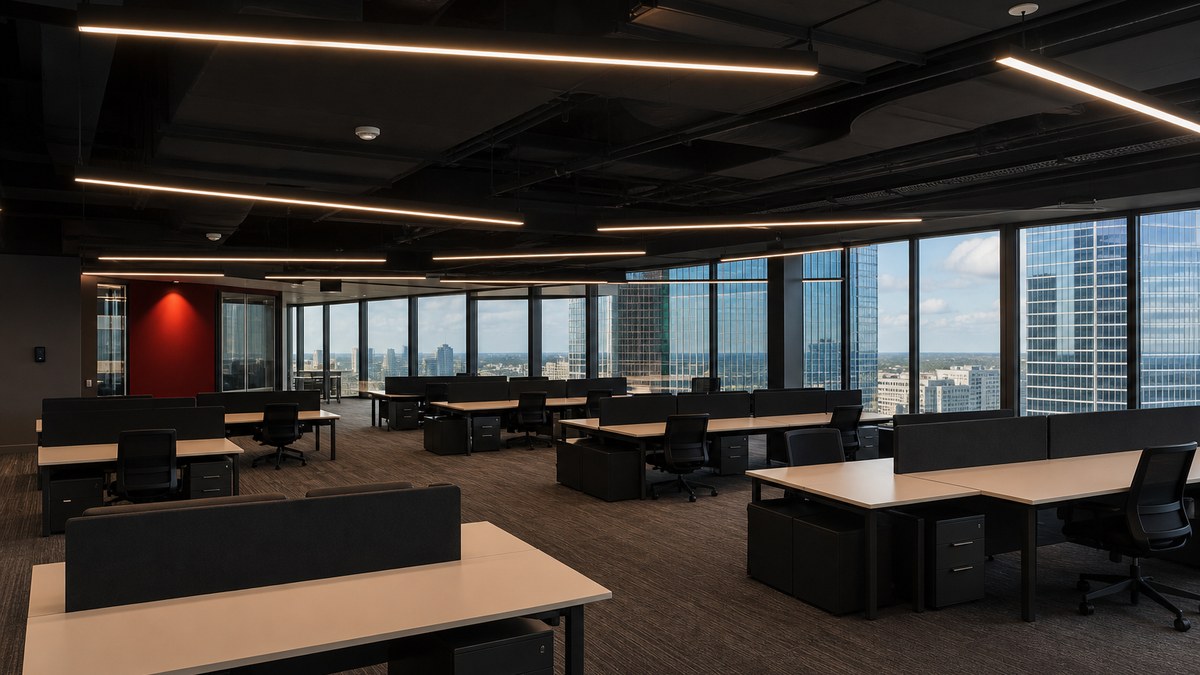
Offices need comfortable, low-glare light for screens, good vertical light on faces for meetings and video calls, and controls that follow occupancy. Multi-tenant towers add phasing challenges: work is usually done floor by floor, after hours, with tenant notices and elevator coordination. Lobbies and amenity spaces often get architectural treatments such as cove lighting, wall washing and accent lighting. See our commercial lighting services for typical office scopes.
Warehouses and industrial facilities
High-bay LED fixtures with aisle optics, occupancy sensors and daylight harvesting under skylights are the core of most warehouse upgrades. Mounting heights, rack layouts, forklift traffic and dust or heat conditions drive fixture selection. Installation is planned around shifts and shipping schedules, often aisle by aisle so operations never stop.
Retail and shopping centers
Retail lighting is about merchandise and atmosphere: color rendering, accent lighting and storefront visibility. Exterior parking, canopies and facades are part of the same experience. Our Texas shopping center LED lighting guide covers those spaces in depth.
Hotels and hospitality
Hotels combine back-of-house efficiency with guest-facing design: lobbies, ballrooms, corridors, guest rooms, pools and exterior facades. Work must be scheduled around occupancy and events. Decorative elements like fiber optic starlight ceilings are often added during the same project.
Schools, churches and public buildings
Classrooms, sanctuaries, gyms and administration buildings each have different needs, and public owners often purchase through bids or cooperative contracts. Installation usually happens during breaks. For athletic facilities, see our LED sports lighting guide, and for indoor pools, our pool and aquatic center lighting guide.
Exterior, parking and facades
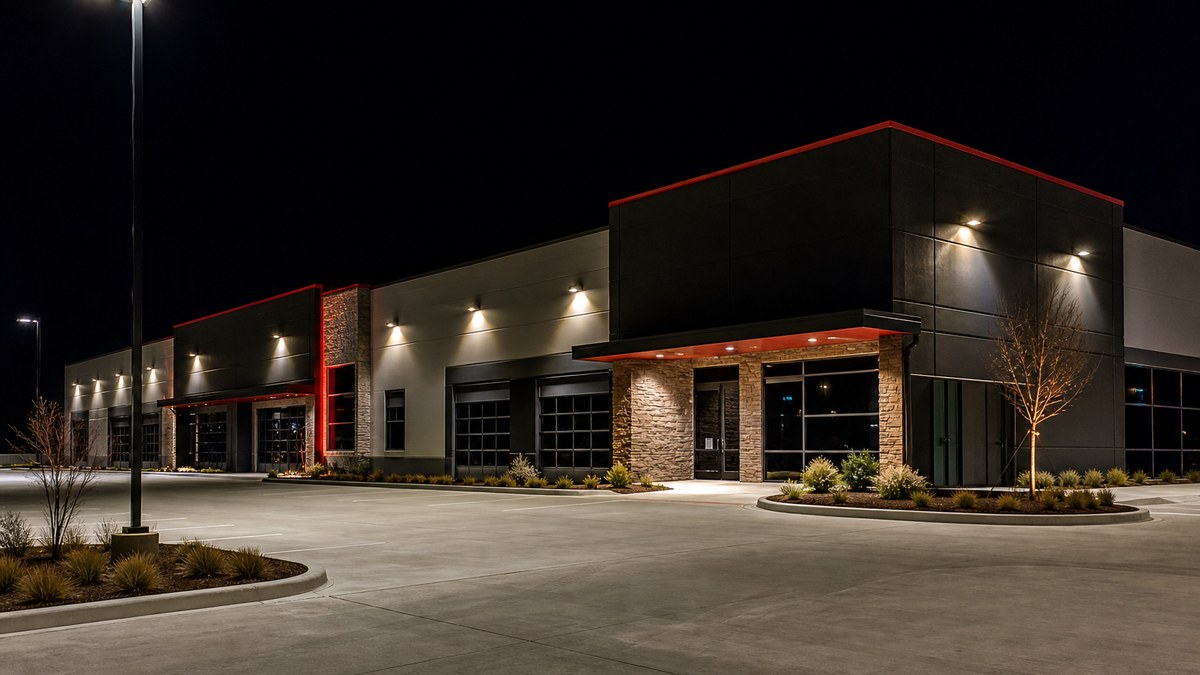
Exterior LED projects cover pole-mounted area lights, wall packs, canopy lights, landscape and facade lighting. Pole condition, wind exposure, glare control and local lighting ordinances all matter. Facades can be lit with static white or color-changing architectural lighting to give a building a nighttime identity.
Texas conditions your installer should plan for
Texas is not a mild environment for lighting equipment. A good installation plan accounts for:
- Heat: attics, plenums, canopies and parking structures get very hot. Fixtures and drivers should be rated for the ambient temperatures where they are installed.
- Humidity and coastal air: Houston, Corpus Christi, Galveston and the Rio Grande Valley call for corrosion-resistant housings and appropriate wet or damp ratings.
- Storms, lightning and surges: surge protection at fixtures and panels protects LED drivers from damage.
- Wind and hail: exterior poles, brackets and fixtures should be suited to local wind exposure, and existing poles should be evaluated before new heads go on.
- Dust: West Texas and industrial sites benefit from sealed fixtures that are easy to clean.
Planning around tenants and operations
The best installers treat disruption as part of the design. Common strategies include:
- Phasing work by floor, zone or aisle so most of the building stays fully operational
- Night and weekend shifts in offices, retail and healthcare-adjacent spaces
- Dust and debris protection for finished ceilings, flooring and inventory
- Clear tenant notices and a single point of contact for the property manager
- Daily cleanup and secure staging so material is never left in public areas
- Responsible recycling of fluorescent lamps and old ballasts
Utility incentives and documentation
Several Texas utilities run commercial energy-efficiency programs. Customers in the Oncor, CenterPoint Energy, Austin Energy or CPS Energy service areas may qualify for lighting incentives, depending on program availability, eligibility rules and funding at the time of the project. Programs often require pre-approval before equipment is purchased, so incentives should be checked during design, not after installation.
Your installer can help gather the documentation programs typically ask for, such as fixture counts, product data and before-and-after details, but final eligibility always comes from the program itself.
How to compare commercial LED installers
Proposals can look very different on paper. Use these questions to compare them fairly:
- Who performs the electrical work, and under which Texas license?
- Was a fixture-by-fixture site survey done, or is the proposal based on estimates?
- Is the scope broken down by space, with a fixture schedule and product data?
- Are photometric layouts provided where light levels matter?
- What controls are included, who programs them, and how are settings documented?
- How will emergency lighting be handled and tested?
- Who pulls permits and coordinates inspections?
- What is the installation schedule, and how will work be phased around occupants?
- What manufacturer warranties apply, and who handles service after installation?
- Can the installer show relevant experience on buildings like yours?
For a deeper checklist on qualifications, read our guide to commercial lighting contractors in Texas.
What drives project cost
Commercial LED installation projects vary too much for a one-size price, so we quote every project after a site review. The main cost drivers are:
- Scope approach: lamp replacement, retrofit kits, fixture replacement or full redesign
- Fixture types and quantities: troffers, downlights, high bays, decorative and exterior fixtures
- Mounting heights and access: lifts, ceiling types and occupied spaces
- Controls: basic sensors and schedules through networked systems
- Electrical changes: rewiring, new circuits, panel work and emergency lighting
- Schedule: after-hours and phased work
- Exterior work: poles, foundations and wiring for parking and site lighting
Every proposal from Texas LED Lights is project-specific and itemized by area, so you can see exactly what is included.
Who installs it: our experience
Texas LED Lights brings 15+ years as an authorized architectural lighting dealer and project coordinator. Our licensed installation partner has completed over 200 major sports and commercial projects across the US and Canada — NFL, NBA, NHL, MLS, NCAA and NASCAR. That combination of design, coordination and large-project installation experience is what we bring to offices, warehouses, retail, hospitality and public buildings across Texas.
We serve the whole state from our DFW home base, including Houston, Austin, San Antonio, El Paso, Corpus Christi, Lubbock and the Rio Grande Valley. See our service areas, browse project types, or explore Luminance design-build for complete lighting transformations. Venues that also need displays can add LED video walls or LED signage and message centers.
Frequently Asked Questions
What does a commercial LED lighting installer do?
Should we retrofit existing fixtures or replace them?
Do commercial LED retrofits need a permit in Texas?
Are lighting controls required on commercial LED projects?
Can installation happen without shutting down our business?
What happens to our emergency lighting during a retrofit?
Are there utility incentives for commercial LED lighting in Texas?
How long does a commercial LED installation take?
How much does commercial LED lighting installation cost?
What areas of Texas do you serve?
Get your building installed right the first time
Request a consultation and we will follow up to schedule a site survey of your property. Prefer a call? Book a meeting.
Related
Our Texas lighting network: Dallas commercial LED lighting, Fort Worth LED lighting, Arlington LED lighting, Irving LED lighting, Plano LED lighting, wholesale LED components, fiber optic starlight ceilings, 360° fiber optic lighting, premium pool lighting, modular building solutions, and Dallas modular structures.