LED Sports Lighting in Texas: Football Stadiums, Fields, Gyms & Arenas
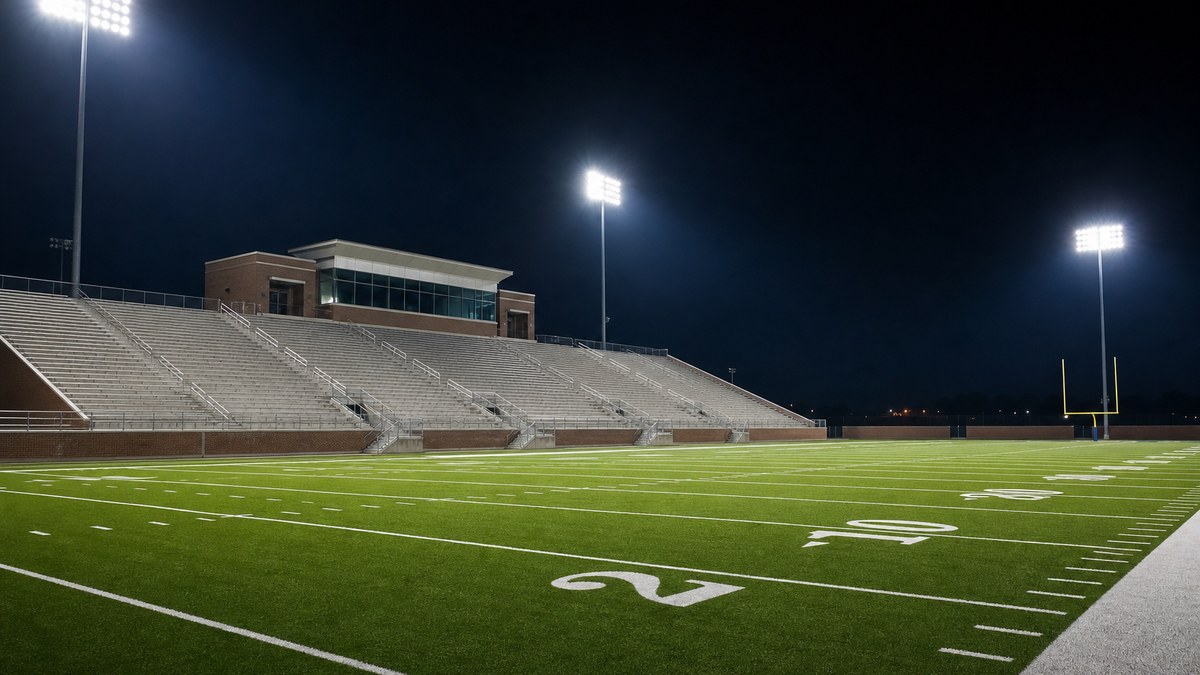
LED sports lighting in Texas has become the standard for new stadiums and the most common upgrade for older fields. Friday night football is a way of life across the state, and the same lights also carry soccer, band practice, track meets, baseball and softball, community events and graduation ceremonies. Gyms, field houses, arenas, natatoriums and park complexes run long hours too. When those facilities still rely on aging metal halide fixtures, they face dim and uneven light, minutes-long restart delays after a power blip, frequent lamp changes on very tall poles, and spill light that bothers neighbors.
This guide is for school district facility and athletic directors, colleges, city parks and recreation departments, private schools, sports complex owners and venue operators across Texas. It explains how LED sports lighting works, what lighting classes and standards apply, how to light football, baseball, soccer, tennis and indoor venues, how to control glare and spill, what controls and broadcast considerations matter, and how to plan a project from assessment to commissioning.
LED sports lighting uses high-output, precisely aimed LED floodlights and control systems to light fields, courts and arenas more evenly, more efficiently and with far less maintenance than metal halide.
- Instant on/off: no warm-up or restrike delay after outages or between events
- Better uniformity: even light across the playing surface for players, officials and cameras
- Glare and spill control: engineered optics keep light on the field and off neighbors
- Lower maintenance: far fewer lift trips to service fixtures on tall poles
- Controls: scheduling, dimming for practice, remote monitoring and show effects
- Standards: designs follow IES RP-6 classes and governing-body requirements
- Pricing: quoted per facility after a site review and photometric design
Why Texas facilities are switching to LED
Texas is home to a huge number of high school football programs, baseball, softball and soccer fields, municipal parks, college venues and indoor arenas. Many of those facilities were lit with metal halide systems that are now reaching the end of their life. LED changes the experience for everyone involved:
- Players and officials: more uniform light reduces dark spots and shadows, making the ball easier to track at speed and in the air.
- Spectators: brighter, cleaner light and less glare in the stands improve the game-night experience.
- Operations staff: instant on/off means no waiting after a power interruption, a lightning delay or halftime shows.
- Maintenance teams: long-life LED dramatically reduces lamp and ballast replacements high on the poles.
- Neighbors: modern optics reduce spill and sky glow compared with older floodlights.
- Budgets: far lower energy use and maintenance free up money for programs.
Weather is also a factor. Texas facilities deal with extreme heat, high winds, hail, coastal humidity and severe storms. Fixtures, drivers, crossarms and poles need to be specified for those conditions, and existing poles must be evaluated before new fixtures go on them.
Sports lighting standards and classes
Sports lighting design in the United States is guided by the Illuminating Engineering Society's recommended practice for sports and recreational area lighting, IES RP-6. It groups facilities into classes based on the level of play and the number of spectators:
| Class | Typical facility | What it means for design |
|---|---|---|
| Class I | Professional and major college venues with large crowds | Highest light levels and uniformity, often broadcast-ready |
| Class II | College and larger high school stadiums with significant spectator capacity | High light levels with strong uniformity for players and spectators |
| Class III | Many high school fields and competitive facilities with some spectators | Moderate light levels suited to competitive play |
| Class IV | Recreational, practice and social play with few spectators | Lower light levels focused on safe, comfortable play |
Specific light-level and uniformity targets come from the current edition of RP-6, the sport's governing body and, for televised events, broadcaster requirements. A photometric design shows how a proposed layout meets those targets before any fixture is ordered. Local codes and ordinances add rules on spill, glare, curfews and pole heights.
How LED sports lighting systems work
Fixtures and optics
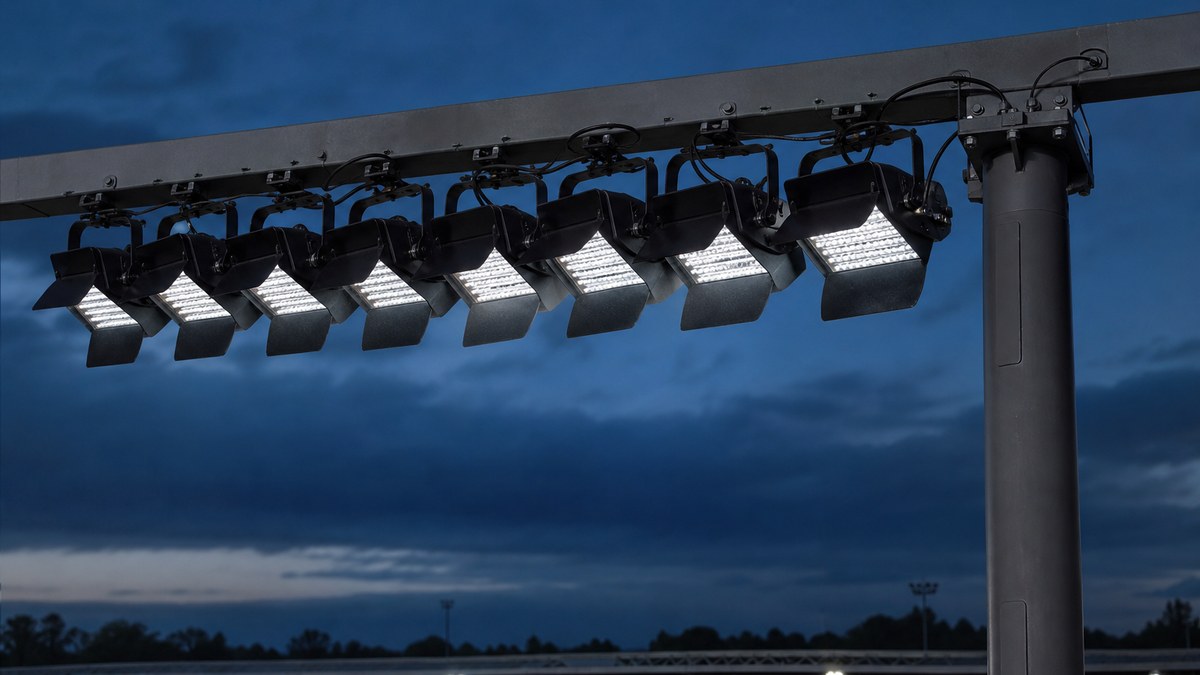
LED sports floodlights combine high-output LED arrays with precision optics that shape the beam. Instead of one wide flood per fixture, each luminaire is aimed at a specific part of the field. Visors, louvers and internal shields cut off light above the horizontal and toward the stands, which is the key to glare and spill control.
Poles, crossarms and mounting height
Pole height and setback determine aiming angles. Taller poles let fixtures aim more steeply down at the field, reducing glare for players looking up at a ball. Existing poles may be reusable if they are structurally sound and rated for the new fixtures' weight and wind load; otherwise new poles and foundations are part of the project. A structural evaluation is an essential first step on retrofits.
Drivers and electrical
Drivers can be mounted on the fixture or remotely in enclosures at the base of the pole for easier service. Electrical design covers feeders, panels, surge protection and grounding, which matters in a state with frequent lightning.
Controls
Modern systems can be scheduled, dimmed for practice, switched by zone and monitored remotely. Many venues add effects for pregame introductions, touchdowns and halftime shows using DMX or manufacturer control platforms.
Lighting by sport and venue
Football stadiums
Football fields need even light from end zone to end zone, high enough vertical light to follow passes and kicks, and careful aiming so players and kickers are not looking into fixtures. Stadiums usually use four to six or more poles depending on class and layout, with additional lighting for stands, concourses, entries and parking.
Baseball and softball
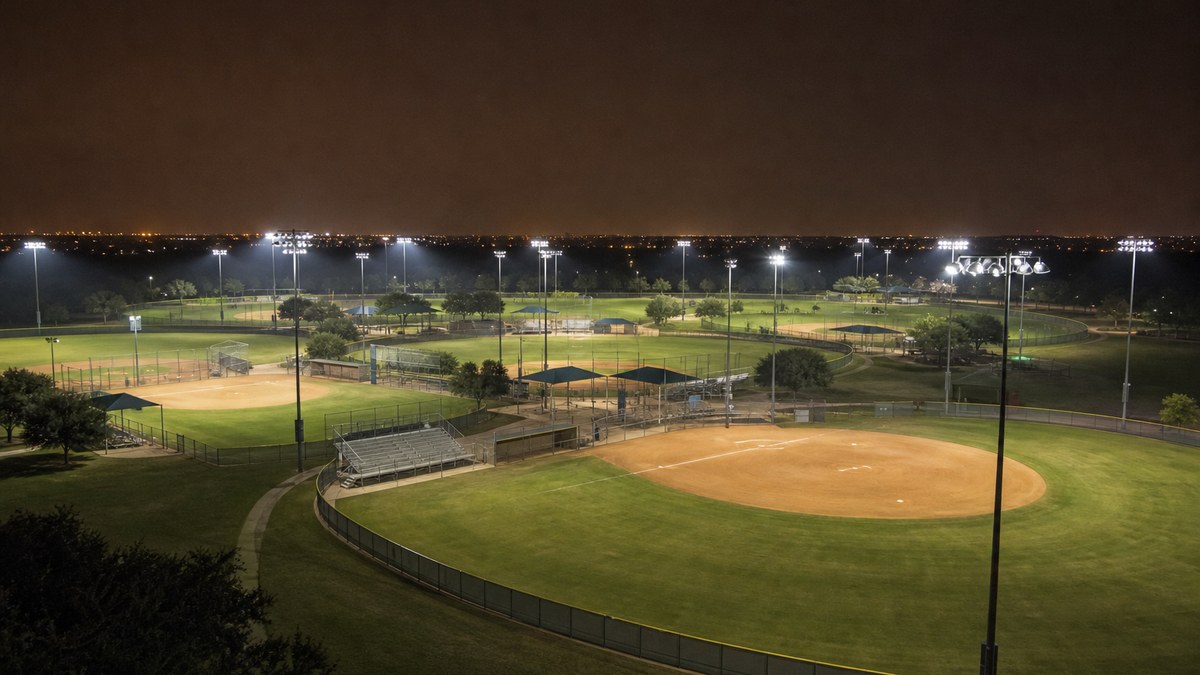
Baseball and softball are some of the most demanding sports to light because the ball travels high and fast in every direction. Infields typically need more light than outfields, and aiming must keep glare out of the batter's and fielders' sightlines. Pole placement around the foul lines and outfield is critical.
Soccer and multipurpose fields
Many Texas districts share fields between soccer, football, lacrosse, band and physical education. Zoned controls let staff light only the area in use, and a layout designed for multiple sports avoids dark corners.
Tennis and pickleball courts
Courts need uniform light with minimal glare across the net line. Pickleball's rapid growth has many cities and clubs adding or converting courts, and LED makes lighting them practical with low maintenance.
Gyms, field houses and arenas
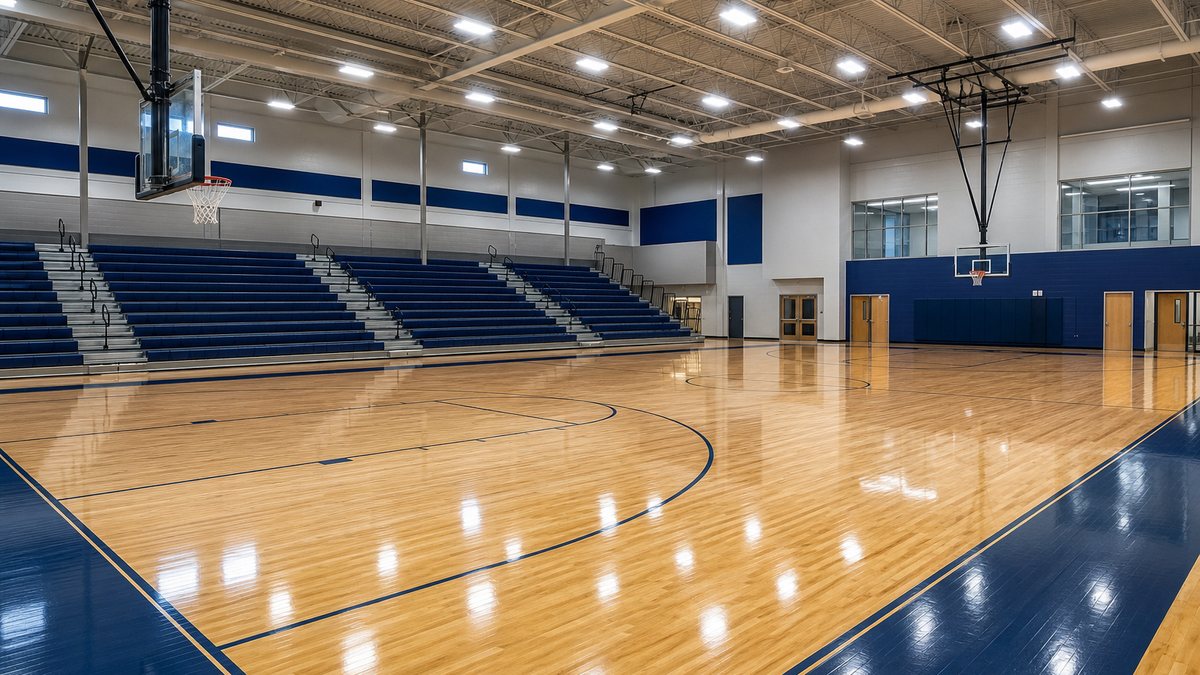
Indoor venues use LED high-bays or sports-rated fixtures with shielding so athletes can look up without discomfort, plus impact protection in gyms. Arenas often add LED video boards, ribbon displays and show lighting. Our network delivers LED video walls and displays for indoor venues as well.
Natatoriums
Indoor pools need corrosion-resistant fixtures, careful aiming to limit reflected glare on the water, and safe maintenance access over the pool. See our pool and aquatic center lighting guide for details.
Planning a field or arena upgrade in Texas?
Tell us about your facility and we will follow up to schedule an assessment and prepare a project-specific proposal.
Glare, spill light and good neighbors
Many Texas fields sit next to homes. Older floodlights often throw light into backyards and bedrooms and create a visible glow over neighborhoods. Modern LED optics greatly reduce that, but only if the system is designed for it.
- Spill light: light falling outside the playing area, measured at property lines. Shielding and aiming keep it to a minimum.
- Glare: bright fixture images seen by neighbors, drivers, players or spectators. Visors and steeper aiming angles reduce it.
- Sky glow: light directed upward. Full cutoff above the horizontal helps meet dark-sky goals.
- Curfews and dimming: automatic schedules turn lights off or down after events end.
A photometric design should show spill light at the property line, not just on the field. That gives school boards, city councils and neighbors confidence before the project starts.
Broadcast, streaming and video
More Texas games are streamed or broadcast every season, and video changes the lighting requirements:
- Vertical light: cameras need light on players' faces and jerseys, not just on the turf.
- Uniformity: bright and dark patches are far more obvious on camera than to the eye.
- Flicker: drivers must be flicker-free at the frame rates used for slow-motion replays.
- Color quality: consistent color temperature and good color rendering make team colors and skin tones look right.
If streaming or broadcast is part of the plan, design for it now; upgrading later usually costs more than building it in.
Controls, monitoring and show lighting
| Control feature | What it does | Why it matters |
|---|---|---|
| Scheduling | Turns lights on and off for games, practices and curfews | No lights left on overnight |
| Practice and game modes | Lower output for practice, full output for games | Saves energy and extends life |
| Zoning | Lights only the field or court in use | Multi-field complexes run efficiently |
| Remote control and monitoring | Phone or web control with fault alerts | Staff respond before game night |
| Show effects | Flashes, chases and color for intros and scoring | Game-day atmosphere and community events |
| Integration | Ties into scoreboards, audio and building systems | Coordinated game presentation |
Retrofit or new system?
Most Texas facilities fall into one of three paths:
- Fixture retrofit on existing poles: new LED fixtures and crossarms on poles that pass a structural review. Often the fastest path, but limited by existing pole locations and heights.
- Partial rebuild: keep some poles, replace or add others to fix uniformity, glare or spill problems.
- New system: new poles, foundations, fixtures, electrical and controls, designed from scratch for the target class.
The right answer depends on pole condition, the lighting class you need, neighborhood constraints and budget. A site assessment and photometric comparison of the options makes the decision clear.
How a Texas sports lighting project works
- Assessment: walk the site, measure existing light levels, inventory poles and fixtures, and review electrical service and neighbors.
- Goals: confirm sports, levels of play, spectator capacity, streaming plans and community constraints.
- Photometric design: model light levels, uniformity, glare and spill for each option.
- Structural and electrical review: confirm poles, foundations, wind loads and electrical capacity.
- Proposal and approvals: a project-specific proposal plus any board, council or procurement steps.
- Scheduling: install between seasons where possible, coordinated with athletic calendars.
- Installation: poles, crossarms, fixtures, drivers, wiring and controls installed by licensed professionals.
- Aiming and commissioning: fixtures aimed to the design, controls programmed and light levels verified at night.
- Training and service: staff trained on controls, with ongoing service available.
What drives project cost
Sports lighting projects vary enormously, so we price each one after an assessment and photometric design. The main factors are:
- Lighting class and sport: higher classes need more fixtures and tighter uniformity
- Field size and layout: single field, multipurpose field or multi-field complex
- Poles and foundations: reuse versus new, heights and soil conditions
- Electrical service: capacity, distance and underground work
- Controls and effects: basic scheduling through show lighting and remote monitoring
- Broadcast requirements: vertical light, uniformity and flicker performance
- Site access and schedule: crane access, turf protection and the athletic calendar
Public entities often buy through competitive bids or cooperative purchasing programs; we can work within your procurement process. Some utilities may also offer energy-efficiency incentives for qualifying projects, depending on the program and its availability.
Who builds it: our experience
Texas LED Lights brings 15+ years as an authorized architectural lighting dealer and project coordinator. Our licensed installation partner has completed over 200 major sports and commercial projects across the US and Canada — NFL, NBA, NHL, MLS, NCAA and NASCAR. That experience at the highest level of sports lighting is the same team behind school, college and municipal projects across Texas.
We also handle the rest of the venue: concourse and parking lighting, architectural facade lighting, LED video boards and LED signage and message centers. Locally, our DFW teams at Dallas LED Lights and Arlington LED Lights support big venue projects across the metroplex.
Questions to ask before you buy
- What IES RP-6 class is the design based on, and why?
- Can we see the photometric report, including spill light at the property line?
- Have our existing poles been structurally evaluated for the new fixtures?
- Are the fixtures and drivers flicker-free for slow-motion video?
- What controls are included: scheduling, practice modes, remote monitoring, effects?
- How will installation be scheduled around our season?
- What warranties apply to fixtures, drivers and poles, and who provides service?
Frequently Asked Questions
What are the benefits of LED sports lighting over metal halide?
What standards apply to sports field lighting?
Can we reuse our existing light poles?
How do you reduce light spilling into neighborhoods?
Is LED sports lighting good for streaming and broadcast?
Can LED stadium lights do light shows?
When is the best time to install sports lighting?
How much does LED sports lighting cost?
Do you work with school districts and cities?
What areas of Texas do you serve?
Light your field for the next generation
Request a consultation and we will follow up to schedule a site assessment of your facility.
Related
Our Texas lighting network: Dallas commercial LED lighting, Fort Worth LED lighting, Arlington LED lighting, Irving LED lighting, Plano LED lighting, wholesale LED components, fiber optic starlight ceilings, 360° fiber optic lighting, premium pool lighting, modular building solutions, and Dallas modular structures.