Fiber Optic Starlight Ceilings: The Ultimate Guide for Texas Luxury Spaces
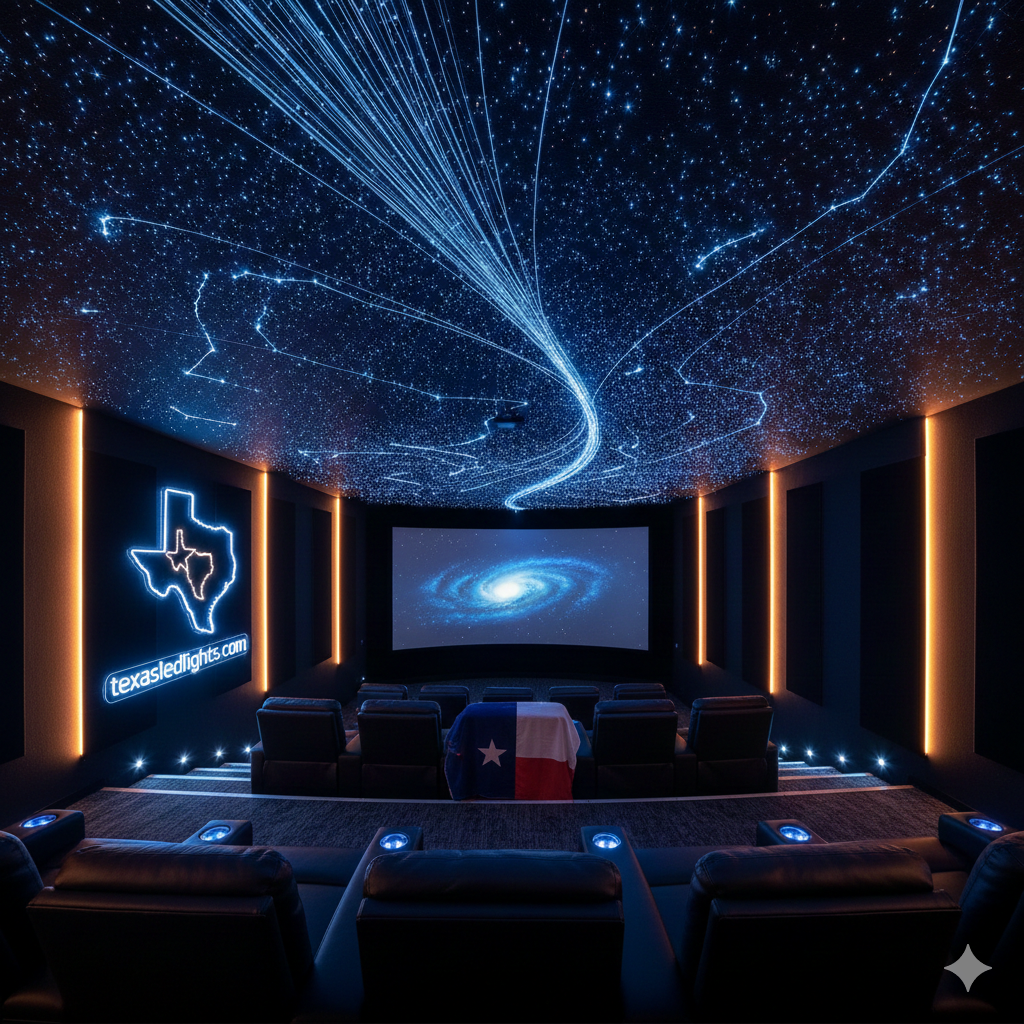
Picture this: You dim the lights in your home theater, press play, and suddenly you're watching a film beneath a breathtaking canopy of twinkling stars. No, you haven't been transported to West Texas ranch country on a clear night. You're sitting in your own home, surrounded by the magic of a custom fiber optic starlight ceiling.
These stunning installations have become the ultimate luxury upgrade for discerning Texas homeowners, high-end hospitality venues, and commercial spaces that demand something extraordinary. From the sprawling estates of Highland Park to boutique hotels in Austin's entertainment district, starlight ceilings are transforming ordinary rooms into unforgettable experiences.
In this comprehensive guide, we'll walk you through everything you need to know about fiber optic starlight ceiling installations in Texas. You'll discover how the technology works, where these ceilings create the most impact, what to expect on pricing, and why professional installation makes all the difference between a mediocre result and a jaw-dropping masterpiece.
Quick Answer: What Is a Fiber Optic Starlight Ceiling?
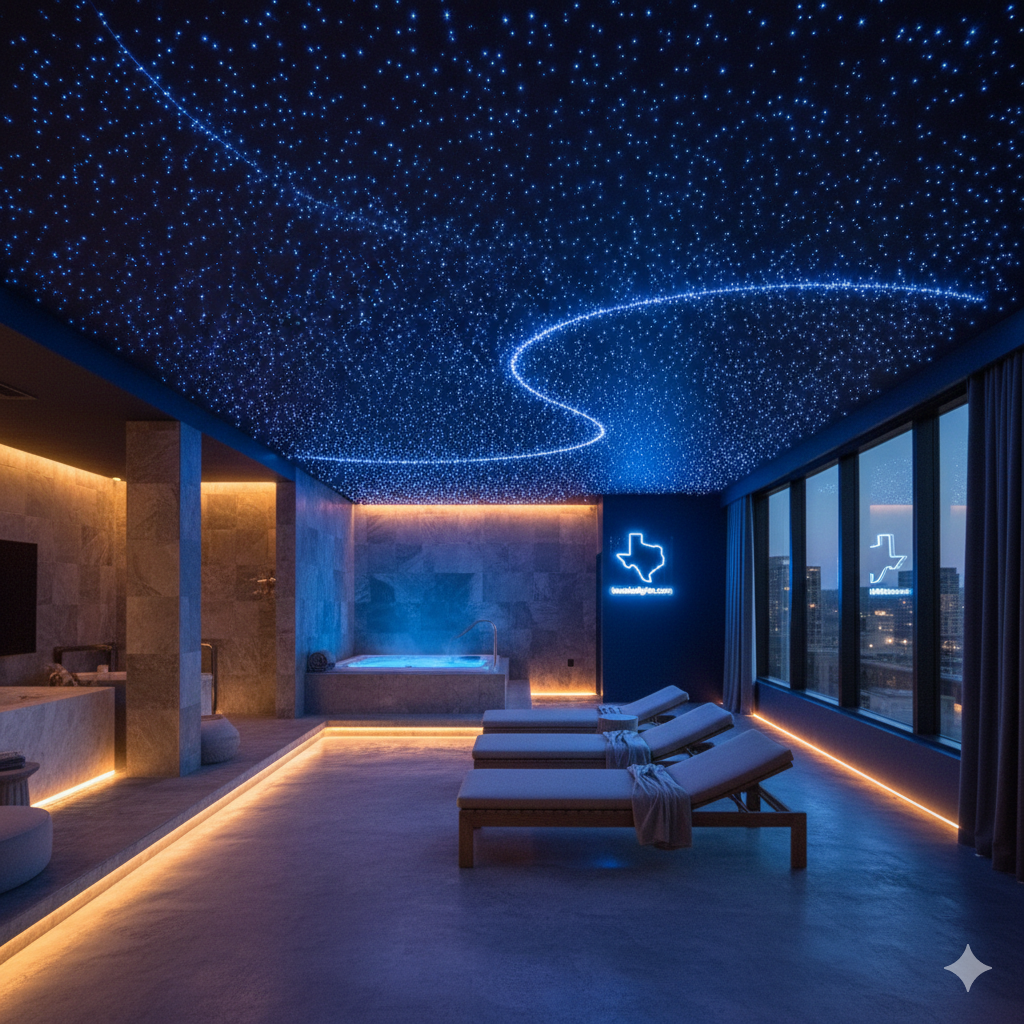
A fiber optic starlight ceiling uses hundreds or thousands of thin optical fibers threaded through ceiling panels to create realistic, twinkling points of light that mimic stars. An LED illuminator powers all the fibers from a single source, making the system energy-efficient, long-lasting (20+ years), and completely safe—even in wet environments like pools and spas.
Key Takeaways:
- Professional installation costs: $15–$40+ per square foot depending on complexity
- Best applications: Home theaters, master bedrooms, restaurants, hotels, spas, and children's rooms
- Lifespan: Fiber optic strands never burn out; LED illuminators last 50,000+ hours
- Features available: Twinkling effects, shooting stars, custom constellations, RGB color changing, smart home integration
- Installation time: 1–5 days depending on project scope and ceiling access
How Fiber Optic Starlight Ceilings Work
The technology behind starlight ceilings is elegantly simple, yet the results are nothing short of spectacular. Understanding how these systems work will help you appreciate why they've become the gold standard for luxury architectural lighting across Texas and beyond.
The Core Components
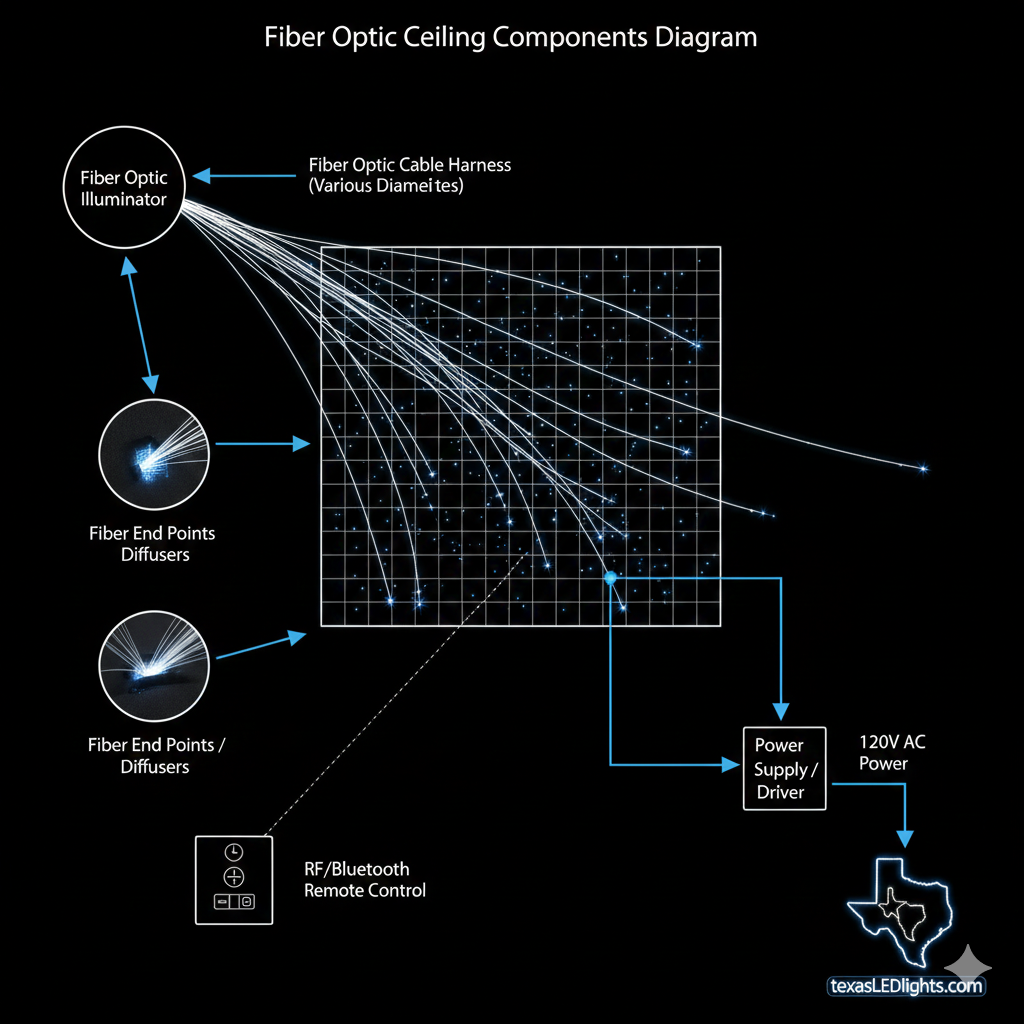
Every fiber optic starlight ceiling consists of three essential elements working together:
1. The LED Illuminator (Light Engine)
This is the brain of your starlight system. A powerful LED light source sits hidden in an accessible location—typically above the ceiling, in a closet, or mounted on a wall. Modern illuminators from providers like Wiedamark LED offer features including adjustable brightness, RGB color changing, twinkling effects, and even shooting star animations. The best units draw minimal power (typically 10–20 watts) while producing stunning visual effects.
2. Fiber Optic Strands
Thin, flexible cables made of plastic or glass carry light from the illuminator to your ceiling. These strands come in multiple diameters—typically three to six different sizes—creating realistic depth and dimension. Thicker fibers appear as brighter, closer stars, while thinner ones simulate distant celestial bodies. Professional installations like those from American Starlight Ceilings use high-quality end-glow fibers that produce crisp, bright points of light.
3. The Ceiling Panel System
The fibers terminate in ceiling panels, which can be custom-made drywall installations, pre-fabricated acoustic panels, or stretch ceiling systems. Each tiny fiber tip creates one "star" on your ceiling surface. Panel systems from 360 Fiber Lighting integrate acoustic absorption with the visual effect—perfect for home theaters where sound quality matters as much as aesthetics.
Why Fiber Optics Beat Other Solutions
You might wonder why fiber optics dominate the luxury starlight ceiling market when LED strips and other technologies exist. The answer comes down to three factors:
Safety: The fiber strands carry light, not electricity. This makes them completely safe for humid environments like bathrooms, saunas, pool houses, and spa areas. You can even install fiber optic star floors in swimming pools—something impossible with direct electrical lighting.
Longevity: Fiber optic strands never burn out. They'll last 20 years or more with zero degradation. The LED illuminator needs eventual replacement (typically every 10–15 years), but that's a simple swap rather than ripping out your entire ceiling.
Realism: Multiple fiber diameters combined with randomized placement create depth that LED panels simply cannot match. When you add twinkling effects synchronized at different speeds, the result looks genuinely like a clear Texas night sky.
Best Applications for Starlight Ceilings in Texas
Starlight ceilings aren't just for home theaters anymore. Across the Lone Star State, we're seeing creative installations in spaces that benefit from dramatic ambiance, relaxation-focused environments, or that simple "wow factor" that makes guests stop and stare.
Luxury Home Theaters & Media Rooms
This remains the most popular application, and for good reason. A dedicated home theater in Dallas, Plano, or Fort Worth transforms from "nice bonus room" to "private cinema experience" with a properly designed starlight ceiling. The stars provide subtle ambient light during films without washing out the screen, and the psychological effect of watching movies "under the stars" enhances immersion dramatically.
For Texas homeowners building custom theaters, our teams at Dallas LED Lights and Fort Worth LED Lights recommend integrating acoustic star panels that serve double duty—absorbing sound reflections while creating visual magic. Modern panels achieve NRC ratings up to 1.0 (absorbing 100% of sound that hits them), making your theater look and sound incredible.
Master Bedrooms & Children's Rooms
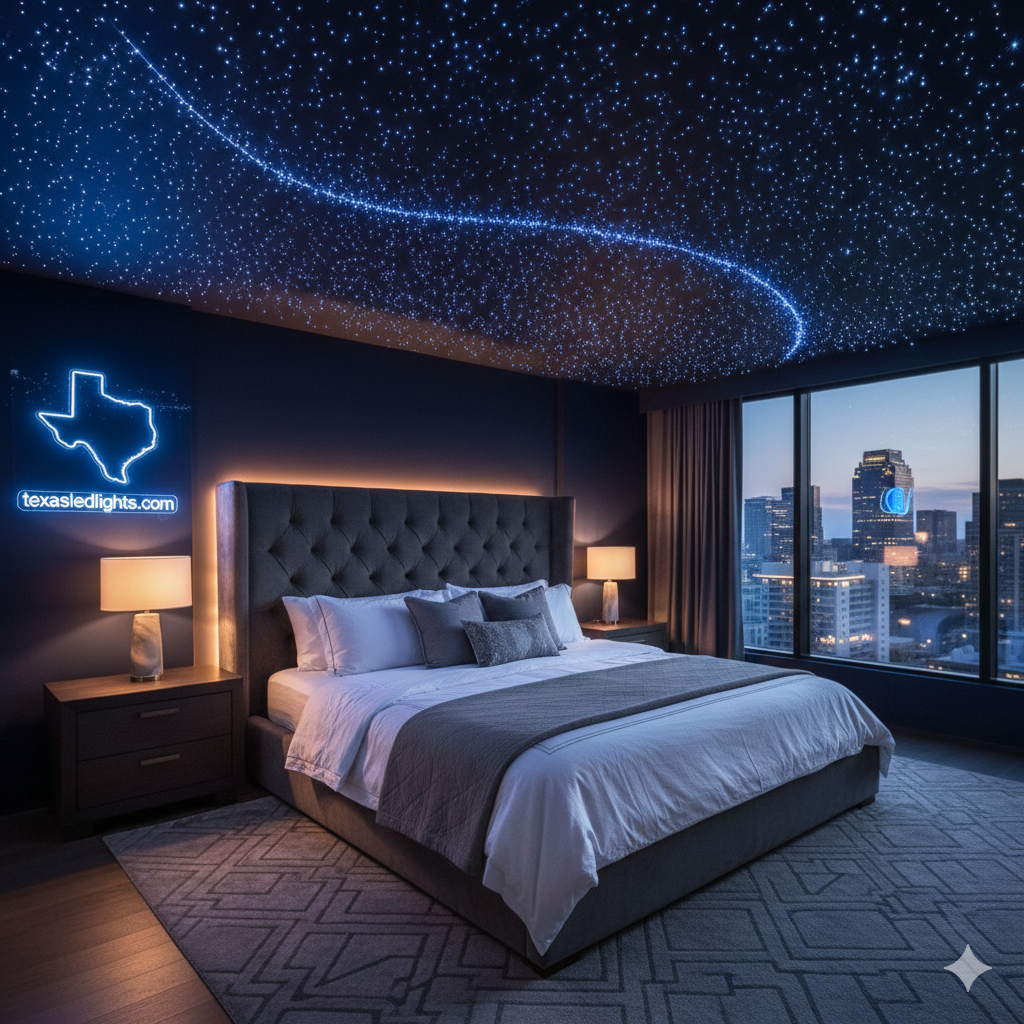
Imagine drifting off to sleep beneath a gently twinkling night sky. For master suites, starlight ceilings create an unmatched romantic atmosphere. Many Texas clients request custom constellation patterns—perhaps the night sky from their wedding date or a meaningful zodiac arrangement.
Children's bedrooms benefit enormously from starlight installations. The soft glow provides gentle nightlight functionality without harsh brightness, and kids absolutely love watching their personal star show before sleep. Educational elements like accurate constellation mapping turn bedtime into astronomy lessons.
Restaurants, Bars & Hospitality Venues
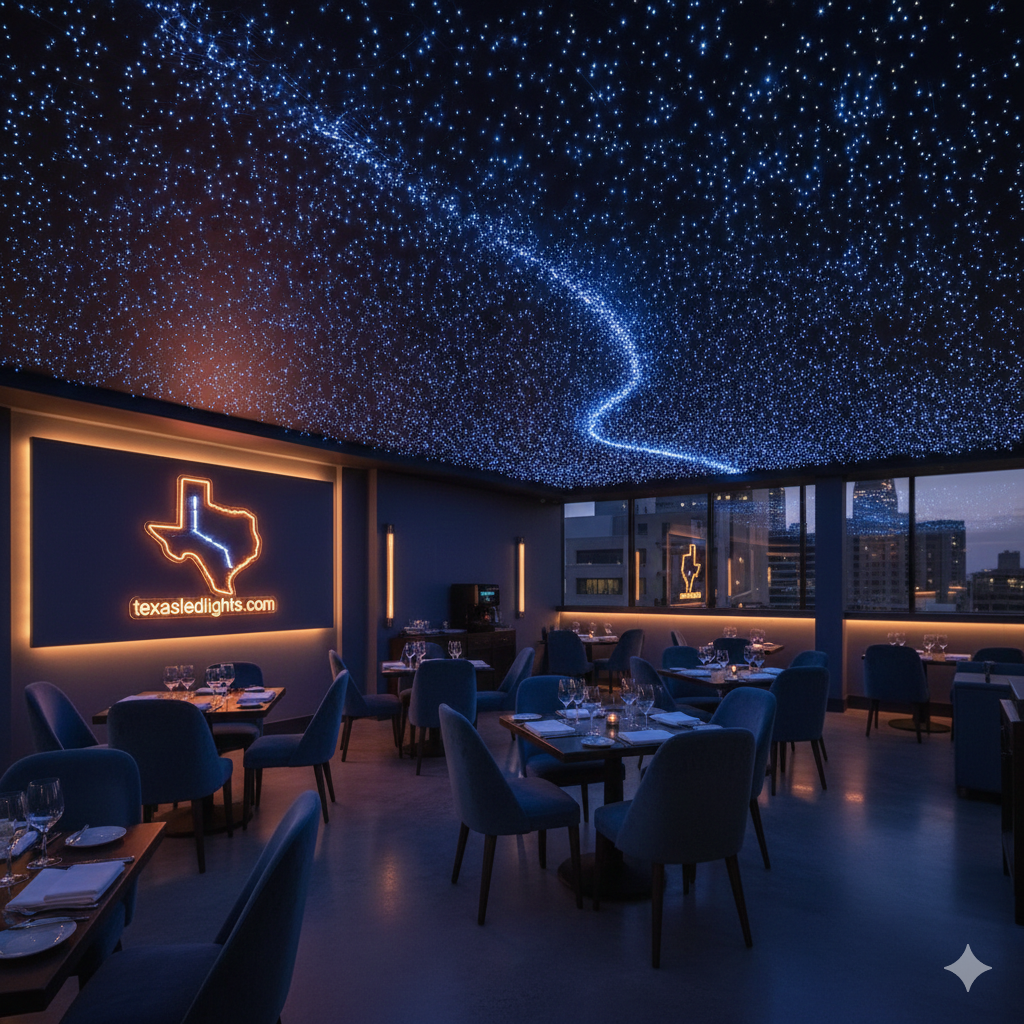
Texas restaurants and bars have discovered that starlight ceilings create Instagram-worthy moments that drive social media buzz. Upscale dining rooms in Houston and Austin use overhead stars to establish intimate, memorable atmospheres. Rooftop bars create the illusion of outdoor dining even in climate-controlled spaces.
Hotels and resorts are major adopters. From boutique properties in San Antonio's River Walk district to large convention hotels in Irving, starlight installations differentiate lobbies, spa areas, and presidential suites from competitors. Research shows well-designed lighting increases guest satisfaction scores and justifies premium room rates.
Spas, Wellness Centers & Medical Facilities
Relaxation environments benefit tremendously from starlight ambiance. Day spas across the DFW metroplex install star ceilings in massage rooms, meditation spaces, and float tank rooms. The gentle, non-distracting light promotes the calm mental state that wellness experiences demand.
Medical applications are growing too. Hospitals and cancer treatment centers have discovered that starlight ceilings in patient rooms and procedure areas reduce anxiety. Dental offices install them above treatment chairs to give patients something pleasant to focus on during procedures.
Pool Houses, Saunas & Outdoor Living Spaces
This is where fiber optics truly shine over alternatives. Because the strands carry light (not electricity), they're completely safe in wet environments. Pool houses across Highland Park and Southlake feature starlight ceilings that transform evening swims into magical experiences.
For Texas pool owners wanting to go even further, Premium Pool Lighting offers fiber optic pool floor installations—imagine swimming through a field of twinkling stars beneath you. Combined with perimeter LED lighting from Texas LED Lights, the effect is absolutely stunning.
Starlight Ceiling Features & Customization Options
Today's fiber optic systems offer far more than simple white dots on a black background. The customization possibilities allow you to create truly personalized celestial experiences.
Twinkling & Animation Effects
Static Stars: Clean, constant points of light for a serene, unchanging night sky effect.
Twinkling Stars: The most popular option. LED illuminators with motorized "twinkle wheels" cause stars to flicker at varying rates, mimicking atmospheric scintillation you'd see on a real night. Variable-speed twinkle creates remarkably realistic effects.
Shooting Stars: Premium systems include addressable fiber bundles that create animated shooting star trails across your ceiling. Program them for occasional surprises or dramatic "meteor shower" effects for special occasions.
Color Options
Natural White: Warm white (2700K–3000K) creates cozy, residential ambiance. Cool white (5000K+) mimics actual starlight more accurately.
RGBW Color Changing: Modern illuminators offer full RGB spectrum control via remote or smartphone app. Shift your stars from classic white to deep blue, romantic purple, or vibrant party colors. Some systems allow individual color zones within the same ceiling.
Star Density & Patterns
Professional installations typically offer 3–6 fiber strands per square foot for realistic density. Higher-end projects may exceed 10 strands per square foot for ultra-dense star fields.
Random Patterns: Most installations use carefully randomized star placement that appears natural rather than gridded.
Custom Constellations: Work with designers to recreate specific constellations, the Milky Way galaxy, or even custom patterns like your family's zodiac signs or a meaningful date's night sky.
Smart Home Integration
Modern starlight systems integrate with home automation platforms:
• Voice Control: "Alexa, turn on the stars" or "Hey Google, dim the ceiling to 50%"
• Scene Programming: Create "Movie Night," "Romance," or "Party" presets that adjust color, brightness, and twinkling speed
• Scheduling: Automatically activate stars at sunset and turn off at bedtime
• Music Sync: Some systems respond to audio, pulsing colors to match your music
Starlight Ceiling Types Compared
Different installation methods suit different situations. Here's how the main options stack up:
| Feature | Custom Drywall Installation | Pre-Fabricated Panels | Stretch Ceiling Systems |
|---|---|---|---|
| Best For | New construction, dedicated theaters | Retrofits, drop ceilings, acoustic needs | Modern aesthetics, curved surfaces |
| Installation Time | 3–7 days | 1–2 days | 1–3 days |
| Cost Range | $25–$50/sq ft | $15–$35/sq ft | $25–$45/sq ft |
| Ceiling Access Needed | Attic or crawlspace preferred | Minimal—panels mount directly | Perimeter framing required |
| Acoustic Benefits | None (add separately) | Excellent (NRC up to 1.0) | Moderate (with acoustic backing) |
| Future Modifications | Difficult—requires ceiling work | Easy—panels removable | Moderate—membrane replaceable |
| Seamless Appearance | Excellent | Good (seams visible up close) | Excellent |
Fiber Optic Starlight Ceiling Cost in Texas: What to Expect
Let's talk real numbers. Starlight ceiling pricing varies significantly based on installation type, project size, feature set, and whether you're building new or retrofitting an existing space.
Professional Installation Pricing
Entry-Level Projects ($5,000–$10,000)
Small bedroom or bathroom starlight ceiling (80–150 sq ft). Basic twinkling white stars, standard density, pre-fabricated panels. Ideal for testing the waters or adding accent areas.
Mid-Range Projects ($10,000–$25,000)
Typical home theater (150–300 sq ft). Includes acoustic panels, shooting star effects, RGBW color changing, smart home integration. This is where most Texas residential clients land.
High-End Residential ($25,000–$50,000+)
Large dedicated theaters (300–600+ sq ft), custom constellation patterns, multiple illuminator zones, extensive automation integration. Master bedroom suites with matching fiber optic elements in attached bathrooms.
Commercial & Hospitality ($30,000–$150,000+)
Restaurant dining rooms, hotel lobbies, spa facilities, medical treatment rooms. Pricing scales with square footage and complexity. Large-scale commercial projects often exceed $100,000 for multi-room installations.
Cost Per Square Foot Breakdown
• Basic panel systems: $15–$25 per sq ft
• Mid-range acoustic panels: $25–$35 per sq ft
• Custom drywall installation: $30–$50 per sq ft
• Premium stretch ceiling systems: $35–$50+ per sq ft
Note: Most professional installers require minimum project sizes—typically $4,500–$5,000 minimum for residential and $10,000+ for commercial. This covers mobilization, design time, and base equipment costs.
What Affects Your Final Price
• Ceiling access: Easy attic access vs. no crawlspace (can add 20–30%)
• Star density: Basic (3/sq ft) vs. high-density (8+/sq ft)
• Effects package: Static vs. twinkling vs. shooting stars + color changing
• Control integration: Basic remote vs. full home automation tie-in
• Panel type: Standard vs. acoustic vs. custom shapes
• Project location: Remote Texas locations may include travel fees
Professional Installation vs. DIY: Why Expertise Matters
You'll find plenty of DIY starlight ceiling kits online ranging from $50 to $500. While these can work for car headliners or small accent pieces, serious architectural installations demand professional expertise. Here's why:
The DIY Reality
Budget fiber optic kits typically include 200–600 fiber strands—covering perhaps 50–100 square feet at minimal density. Installation requires drilling hundreds of tiny holes, threading fibers by hand, trimming and sealing each strand, and somehow making everything look uniform. Most DIY attempts result in visible holes, uneven star distribution, and disappointing brightness.
The process takes 30–50+ hours for a modest home theater ceiling—assuming you make no mistakes. One wrong move with adhesive or fiber trimming can ruin expensive materials. And fiber optic strands are fragile; kinked or broken fibers create dark spots that can't be fixed without starting over.
Why Professional Installation Wins
Teams like those at Plano LED Lights and Arlington LED Lights bring critical advantages:
Pre-Fabricated Panel Systems: Commercial-grade panels arrive with fibers already installed and tested. Installation becomes mounting panels and connecting illuminators—a one to two day process rather than weeks of tedious work.
Proper Light Engine Selection: Professionals specify appropriate illuminator power for your ceiling size, ensuring adequate brightness throughout. DIY kits often underpower large installations, resulting in dim, disappointing results.
Seamless Integration: Experienced installers handle acoustic treatment, electrical connections, control integration, and aesthetic details like cove lighting "horizon effects" that make the installation complete.
Warranty & Support: Professional installations include comprehensive warranties—typically 5–10 years on materials and workmanship. When something needs service years later, you have a relationship to call on.
The Installation Process: What to Expect
Understanding the professional installation process helps you plan appropriately and ensures smooth project execution.
Phase 1: Consultation & Design (1–2 Weeks)
Your project begins with an on-site assessment. Designers evaluate ceiling construction, access points, room dimensions, and your vision. They'll discuss star density, effect preferences, color options, and control integration. You'll receive detailed proposals with 3D visualizations showing exactly what your finished ceiling will look like.
Phase 2: Fabrication (2–4 Weeks)
Custom panels are manufactured to your specifications. This includes fiber installation, acoustic treatment (if applicable), fabric wrapping, and quality testing. Pre-fabricated panels may ship faster; fully custom work takes longer.
Phase 3: Installation (1–5 Days)
Actual installation moves quickly once panels arrive. Crews mount ceiling frameworks, install panels, route fiber bundles to illuminator locations, connect power and control systems, and calibrate effects. Most residential projects complete in one to three days; large commercial work may require a full week.
Phase 4: Programming & Training (Half Day)
Technicians program your system for optimal performance—setting twinkling speeds, color sequences, brightness levels, and integration with home automation. You'll receive hands-on training operating controls, apps, and maintenance procedures.
Commercial & Specialty Applications in Texas
Beyond residential installations, Texas businesses are discovering starlight ceilings as competitive differentiators.
Hospitality & Entertainment
From the entertainment venues of Irving to the boutique hotels of Dallas, hospitality properties use starlight ceilings to create signature experiences. Restaurant private dining rooms command premium pricing when guests dine under the stars. Hotel spa treatments feel more luxurious. Wedding venues create unforgettable ceremony backdrops.
Healthcare & Wellness
Medical facilities are increasingly adopting starlight elements for patient comfort. MRI suites install fiber optic ceilings to reduce claustrophobia during scans. Dental offices place them above treatment chairs. Cancer treatment centers use starlight in infusion rooms to ease the psychological burden of chemotherapy sessions.
Retail & Brand Experiences
Luxury retail environments use starlight ceilings to distinguish their spaces. Jewelry stores benefit from the celestial association. High-end automotive showrooms create memorable test-drive send-off moments. Even fitness studios install stars in yoga and meditation rooms.
Modular & Portable Solutions
For event venues, trade shows, or spaces requiring flexibility, Dallas Modular Structures and America Modular Buildings can incorporate starlight ceilings into portable structures. This allows breathtaking pop-up experiences for brand activations, outdoor events, or temporary installations.
Frequently Asked Questions About Starlight Ceilings
How long do fiber optic starlight ceilings last?
The fiber optic strands themselves have essentially unlimited lifespan—20+ years is typical with zero degradation. LED illuminators last 50,000–100,000 hours (10–15+ years of normal use) before requiring replacement. When the illuminator eventually needs service, it's a simple swap that doesn't affect your ceiling.
Are starlight ceilings safe for bathrooms and pool areas?
Absolutely. Because fiber optic strands carry light rather than electricity, there's no electrical current at the ceiling surface. This makes them completely safe for high-humidity environments including bathrooms, saunas, steam rooms, pool houses, and even underwater pool floor applications.
How much electricity do starlight ceilings use?
Very little. Modern LED illuminators draw only 10–30 watts—comparable to a single light bulb. Running your starlight ceiling for 8 hours daily costs approximately $2–5 per month in electricity. This efficiency is another advantage over alternative lighting systems.
Can I install a starlight ceiling in an existing room?
Yes. Retrofit installations are common using pre-fabricated panel systems. These mount directly to existing ceilings or within constructed tray ceiling areas. Panel systems make retrofits faster and more cost-effective than threading fibers through existing drywall.
Do starlight ceilings require maintenance?
Minimal maintenance is needed. Dust ceiling surfaces occasionally with a soft brush or vacuum on low setting. Keep the illuminator's ventilation clear. That's essentially it. There are no bulbs to replace, no ballasts to service, and no filters to clean.
Can I control my starlight ceiling with my smart home system?
Yes. Modern illuminators integrate with major home automation platforms including Control4, Crestron, Savant, Lutron, and consumer systems like Google Home and Amazon Alexa. Control brightness, color, twinkling effects, and scheduling through your existing smart home interface.
How many stars should I have per square foot?
Standard installations use 3–6 fiber strands per square foot for a realistic night sky appearance. Premium installations may exceed 8–10 strands per square foot for denser star fields. Your designer will recommend appropriate density based on ceiling height, room use, and desired visual impact.
What's the difference between end-glow and side-glow fiber optics?
End-glow fibers emit light only from the cut tip—perfect for creating star points on ceilings. Side-glow fibers emit light along their entire length like glowing tubes—better for perimeter accent lighting, pool edges, or linear decorative elements. Most starlight ceiling applications use end-glow fibers.
Can I create custom constellation patterns?
Absolutely. Skilled designers can recreate accurate star charts, zodiac constellations, the Milky Way galaxy, or completely custom patterns meaningful to you. Some clients request the night sky from their wedding date, a child's birthday, or a special location's celestial view.
Do starlight ceilings affect room acoustics?
They can improve acoustics significantly. Many fiber optic panel systems integrate sound-absorbing materials, achieving NRC ratings up to 1.0 (absorbing 100% of sound that hits them). For home theaters, this acoustic benefit is as valuable as the visual effect.
Ready to Transform Your Space with a Starlight Ceiling?
Whether you're building a luxury home theater, upgrading a master suite, or creating an unforgettable commercial environment, our Texas team delivers stunning fiber optic starlight ceiling installations throughout Dallas-Fort Worth, Houston, Austin, San Antonio, and beyond.
Call for a Free Consultation: